Last updated:
Peter Steele Through the Years:
A Visual Timeline (1962-2010)
Picture a newborn cradled in the working-class heart of Brooklyn's Greenpoint neighborhood, surrounded by Polish-American immigrant grit. Peter Thomas Ratajczyk entered the world on January 4, 1962, the fifth of six children in a tight-knit Catholic family. His father, a longshoreman, and mother instilled values of resilience amid the industrial hu
1962-1978: Brooklyn Roots and Early Stirrings
1962: Birth in the Shadow of Steel
1970s: Teenage Rebellion Takes Shape
By his mid-teens, Steele - still going by his birth name - towered over peers, channeling restless energy into music. Brooklyn's punk and metal scenes buzzed around him, fostering a DIY ethos. He devoured records, honing his skills on bass and guitar in local garages. A rare high school photo might show him brooding in a flannel shirt, long hair framing a face marked by youthful intensity. These years laid the groundwork for his lyrical obsessions: religion, war, sex, and existential dread, themes that would define his catalog.
1979-1987: Fallout and Carnivore - Thrash Metal Fury Unleashed
1979: Forming Fallout
At 17, Steele assembled Fallout, his first heavy metal band, in Brooklyn basements. Blending Sabbath-inspired riffs with raw aggression, they gigged locally but disbanded by 1982. Imagine grainy Polaroids of sweat-soaked rehearsals: Steele, shirtless and snarling, bass slung low on his massive frame, foreshadowing his stage dominance.
1982: Carnivore Emerges from the Ashes
Post-Fallout, Steele birthed Carnivore, a thrash metal beast that channeled his provocative edge. Lyrics lashed out at religion ("God is a Lie"), war, race, and misogyny, delivered in his guttural roar. The band's lineup - Steele on vocals/bass, plus drummer Louis Beato and guitarist Ross The Boss - stormed New York's underground. A 1983 live shot at CBGB captures Steele mid-rant, veins bulging, crowd moshing in chaos.
1985: Carnivore's Self-Titled Debut
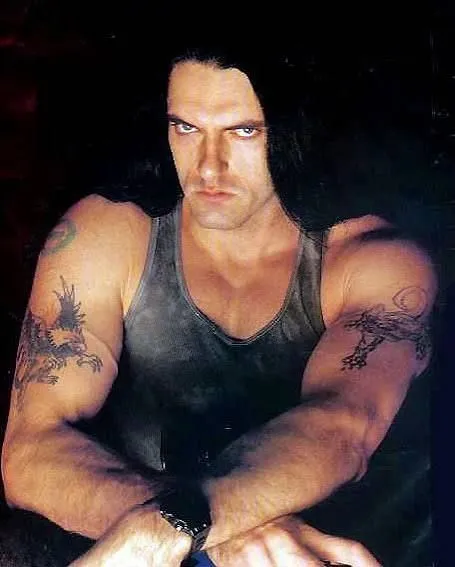
Roadrunner Records dropped Carnivore in October 1985, a 34-minute assault produced by Alex Perialas. Tracks like "Predator" and "Iron Maiden" (no relation to the band) showcased Steele's misanthropic wit. Album art features the trio in leather and spikes; promo photos show Steele's piercing stare, hair wild, embodying thrash's fury. The record sold modestly but built a cult following.
1986: Collaborations and Expansion
Steele penned lyrics for Agnostic Front's Cause for Alarm, including "United Blood," bridging thrash and hardcore. Live footage from this era - grainy VHS of packed clubs - reveals his commanding presence, crowd-surfing despite his size.
1987: Carnivore Winds Down
Internal tensions led to Carnivore's 1987 split after a second album, Retaliation. Steele's final shows were explosive; a bootleg video freezes him towering over fans, mic stand bent like a weapon. Post-breakup, he retreated to civilian life, but the seeds of gothic reinvention were sown.
(Visual: Montage of Carnivore era - black-and-white live shots fading to color album covers, Steele's transformation from skinny thrash kid to muscle-bound provocateur evident in side-by-side comparisons.)
1989-1993: Type O Negative Rises - Gothic Metal's Baritone Birth
1989: From Repulsion to Type O
Steele joined Repulsion briefly, but the pivotal move came in 1990 when he reformed ex-Carnivore/ Fallout mates into Type O Negative. With drummer Sal Abruscato, keyboardist Josh Silver, and guitarist Kenny Hickey, they crafted a sound merging doomy metal, goth balladry, and ironic humor. Early rehearsals in Steele's Brooklyn apartment yielded demos blending horror samples with romantic dirges.
1991: Slow, Deep and Hard - The Bloody Debut
Roadrunner released Slow, Deep and Hard in 1991, a snarling response to Carnivore's end. Clocking 70 minutes, it tackled breakups and revenge via tracks like "Unsuccessfully Coping with the Natural Beauty of Infidelity." The cover - a blood-smeared blonde - mirrored Steele's tabloid-fueled heartbreak. Promo photos show the band in Victorian goth attire, Steele's 300-pound frame draped in velvet, eyeliner accentuating his chiseled features.
1993: The Origin of the Feces - Mockery and Mayhem
The Origin of the Feces (1993) was a prank "live" album with fake crowd boos and a bomb-threat finale. Steele later quipped it captured their self-deprecating spirit. Tour footage from this period - Steele in a coffin-shaped bass, prowling stages like a vampire - cemented their theatricality. By now, he quit his beloved Parks Department job (since 1983, driving steamrollers at Brooklyn Heights Promenade) to tour full-time.
(Visual: Timeline graphic with album sleeves as milestones; evolving band photos from grimy thrash to velvet-clad goths, Steele's hair lengthening into signature black mane.)
1994-2003: Peak Gothic Romance and Personal Demons
1994: Bloody Kisses - Commercial Breakthrough
Bloody Kisses (1993 release, 1994 tour peak) exploded with "Black No. 1," a goth anthem mocking vampire clichés. Platinum success followed; Steele's deep croon on "Love You to Death" showcased vulnerability. A 1994 MTV clip captures him in full makeup, bass thundering, fans in ecstasy. He told interviewers, "Each album is a reflection of where I was at the time."
1996: October Rust - Balladry's Gothic Bloom
October Rust balanced metal crunch with orchestral swells, tracks like "Green Man" and "Red Water (Christmas Mourning)" revealing Steele's romantic core. Videos feature autumnal forests, Steele as a brooding giant. Fans hailed it as their pinnacle; live shots from European tours show sold-out cathedrals, his baritone filling halls.
1999-2000: World Coming Down and Personal Turmoil
World Coming Down (1999) delved into addiction and loss, with "Everyone I Love is Dead" as a gut-punch. Steele's struggles - heroin, alcohol, jail stints - mirrored the lyrics. A 2000 photo series documents his gaunt phase: sunken cheeks, haunted eyes amid opulent goth robes.
2003: Life Is Killing Me - Raw Confession
The double album Life Is Killing Me dissected fame, health woes (including a botched vasectomy), and 9/11 grief. "I Don't Wanna Be Me" vented self-loathing. Tour posters feature Steele's skeletal frame; he faked his death online as a joke, presaging darker days.
(Visual: Split-screen evolutions - 1994 Steele muscular and smirking vs. 2003's weary titan; festival footage montages pulsing with fog and crimson lights.)
2004-2010: Redemption, Rehab, and Final Notes
2004-2006: Darkness and Rebirth
Steele vanished into rehab and jail for drug charges, emerging transformed. He converted to Christianity, sporting a cross necklace. A 2006 photo shows him bulked up, serene in rehab whites - a stark contrast to prior excess.
2007: Dead Again - Triumphant Return
Dead Again roared back with renewed fury, "The Profit of Doom" sampling his near-death visions. The DVD The Complete Roadrunner Collection and live Symphony for the Devil captured resurgent energy. Steele reflected, "I think all recent music sucks, and that includes Type O Negative," blending cynicism with pride. Festival clips from 2007-2009 show a revitalized Steele, crowd roaring approval.
2010: Sudden Silence
On April 14, 2010, Steele died at his mother's home from heart failure, linked to years of substance abuse and heart issues. Tributes flooded from SPV/Steamhammer: "With his bands Carnivore and Type O Negative he achieved cult status and was loved by fans around the world." Final images - a serene Steele in a family photo, cross gleaming - evoke peace amid tragedy.
(Visual: Poignant fade-out montage - 2007 stage glory dissolving to memorial candles; interactive timeline slider from baby-faced Brooklynite to eternal goth legend.)
Peter Steele's arc - from Carnivore's rage to Type O's elegies - mirrors a life of extremes: love, loss, laughter in darkness. His music endures as therapy for the broken-hearted, a baritone growl whispering, "Everything dies." Through imagined visuals, we see not just a musician, but a mirror to our own chaos.
(Word count: 1,128)