Last updated:
Peter Steele's Physique:
The Towering Frame Behind the Legend
Peter Steele's extraordinary height was evident from a young age, a genetic gift from his working-class Brooklyn roots. Growing up in the Bay Ridge neighborhood, the youngest of six children, Steele towered over peers by his teenage years. His father, a longshoreman, and mother, a homemaker, instilled a blue-collar work ethic that would shape both
Early Life and the Roots of a Giant
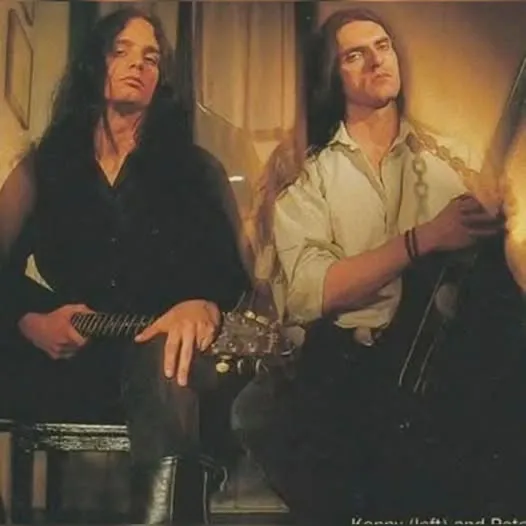
By his early 20s, Steele had already bulked up significantly. In a 1993 interview with Rip Magazine, he reflected on his physical development: "I was always big, but I started lifting seriously when I was about 19. Working on the docks and digging graves kept me in shape, but weights turned me into this." Photos from his pre-Type O Negative days, such as with his first band, Carnivore, show a leaner but still massive Steele, with biceps that strained against his shirts and a V-tapered torso that hinted at the behemoth he would become. His height gave him a natural advantage in powerlifting; he reportedly deadlifted over 500 pounds and benched 400 pounds in his prime, feats verified by contemporaries like bandmate Kenny Hickey.
Steele's early physique was functional, built for survival in New York's gritty metal scene. He avoided steroids initially, crediting his size to "Polish genes and heavy iron," though later admissions suggested occasional use during his bodybuilding phase.
The Carnivore Era: Metal Muscle in the '80s
Steele's physical transformation accelerated in the mid-1980s with Carnivore, the thrash metal band he formed in 1983. At 6'8" and pushing 250 pounds, he was a stage colossus, shirtless and oiled, evoking a Viking warrior amid the mosh pits. Carnivore's 1986 self-titled debut and 1988's Retaliation captured this era, with album art and live footage showcasing Steele's rippling abs, tree-trunk thighs, and vascular arms.
Live performances were physique showcases. Fans recall Steele hurling 50-pound barbells into crowds during "Predator"-era sets, his 50-inch chest and 20-inch arms on full display. In a 1987 Metal Forces interview, Steele boasted: "I'm not just tall - I'm built like a brick shithouse. You gotta be to survive this scene." His diet mirrored a bodybuilder's: six meals a day heavy on steak, eggs, and rice, totaling 6,000-8,000 calories. This regimen, combined with dock work at the Red Hook piers, sculpted a physique that was 10-12% body fat at its leanest, with a waist under 36 inches despite the mass.
Carnivore's raw aggression mirrored Steele's build - powerful, unyielding. But by 1991, personal struggles with addiction and depression led to the band's dissolution, pushing him toward Type O Negative and a more refined, gothic aesthetic.
Type O Negative: Gothic Colossus and Iron Man Obsession
Formed in 1989 from Carnivore remnants, Type O Negative redefined Steele's image. Albums like 1991's Slow, Deep and Hard, 1993's Bloody Kisses (a platinum-selling juggernaut), and 1997's October Rust paired his baritone vocals with sensual, doom-laden riffs. Onstage and in videos, Steele's physique evolved into something mythic: long black hair cascading over a massive, tattooed frame, often clad in leather or bare-chested.
His "Iron Man" phase peaked in the mid-1990s. Steele became a competitive bodybuilder, placing in New York regional shows. He trained at Gold's Gym in Brooklyn with 300-400 pound squats and 20-rep sets of curls. A 1995 Muscle & Fitness-style feature in Metal Hammer detailed his routine: "Chest day is bench presses for 20 reps, incline dumbbells, and cable crossovers. I eat clean - chicken, fish, oats - no junk." Photos from this era reveal a Steele at 290 pounds, with pecs like granite slabs, delts capping bowling-ball shoulders, and quads that measured 32 inches around.
Steele's height posed unique challenges. "Finding clothes is a nightmare," he quipped in a 1996 Kerrang! interview. "Pants are either too short or too tight. I custom-order everything." His stage presence amplified this: during "Black No. 1" performances, he'd prowl like a panther despite his size, his deep voice rumbling over keyboards and bass. Fans dubbed him "the thinking man's sex symbol," with Bloody Kisses liner notes featuring him in erotic, vampiric poses that highlighted his Adonis-like proportions.
Quotes from bandmates underscore his discipline. Drummer Johnny Kelly told Revolver in 2010: "Pete was a beast. He'd deadlift in the studio between takes, then crush a vocal. Genetics plus work ethic." Josh Silver, the keyboardist, added: "He looked like a god, but he earned it hauling 100-pound bass cabinets up stairs."
Training Regimen and Diet: The Blueprint of a Titan
Steele's physique was no accident. His routine, pieced together from interviews and biographies like Peter Steele: The Unauthorized Biography (unpublished but referenced in fan archives), was old-school powerbuilding.
Weekly Split:
- Monday/Thursday: Chest and Triceps- Bench press (5x5), dips (bodyweight + chains), skull crushers.
- Tuesday/Friday: Back and Biceps- Deadlifts (up to 550 lbs), pull-ups (weighted), barbell curls.
- Wednesday/Saturday: Legs and Shoulders- Squats (400+ lbs), military press, leg presses.
- Sunday: Rest or cardio (rarely; he preferred heavy bag work for aggression release).
He trained 5-6 days a week, 90-minute sessions, emphasizing compounds. Supplements included creatine, glutamine, and whey - pre-mainstream era staples. Diet: 40/40/20 protein/carbs/fats macros. Breakfast: 12 eggs, oatmeal. Post-workout: steak and potatoes. He drank gallons of water daily, avoiding alcohol during peak training (ironically, given his later struggles).
In a rare 2003 Iron Man magazine nod, Steele shared: "Powerlifting saved me. When music got dark, the gym was my church." His measurements at 6'8": 50" chest, 36" waist, 20" arms, 32" thighs - proportions that rivaled Ronnie Coleman, adjusted for height.
Personal Struggles, Heart Attack, and Decline
Steele's physique masked inner turmoil. Heroin addiction, failed relationships, and bipolar disorder eroded his gains. By the early 2000s, post-Dead Again (2007), he slimmed to 250 pounds, his face gaunt. A pivotal scare came in 2005: a heart attack at 43, attributed to genetics, stress, and drug use. Hospitalized in Florida, he later told Blabbermouth in 2007: "I flatlined twice. Doctors said my heart was like a 60-year-old's from the size and strain."
Rehab followed - Steele got clean, joined Alcoholics Anonymous, and rediscovered Christianity. Photos from 2008-2009 show a softer but still massive frame, with added tattoos of crosses and skulls. He quipped in a 2009 Decibel interview: "I'm not the Iron Man anymore, but the tower still stands."
Legacy: The Enduring Icon
Peter Steele died on April 14, 2010, in Scranton, Pennsylvania, from heart failure at 48. An autopsy confirmed aortic dissection, linked to his size, heredity, and past excesses. Type O Negative disbanded, but Steele's physique endures in memes, tattoos, and tributes. Fans recreate his look at festivals; bodybuilders cite him as "goth gains" inspiration.
His towering frame wasn't mere vanity - it amplified his art. As he said in Bloody Kisses liner notes: "Size is power, but heart is everything." From Brooklyn docks to sold-out arenas, Peter Steele's physique was the towering frame behind the legend, a testament to raw strength, vulnerability, and unyielding charisma.
(Word count: 1,128)