Last updated:
Peter Steele's 'Christian Woman':
Meaning, Lyrics & Legacy
The opening line of "Christian Woman" immediately establishes its thematic preoccupation: "Forgive her…for she knows not what she does," a phrase that breathes with irony and sensuality. According to Steele's own explanation to Revolver, the song explores how a Christian woman grapples with the conflict between her religious convictions and her sex
Introduction
The Song's Core Meaning and Lyrical Foundation
The song's lyrical influences trace directly to earlier works by Glenn Danzig, particularly "Mother" and "She Rides," both of which explored the intersection of sexuality, Satanism, and women's agency within Christian moral frameworks. Danzig's compelling aesthetic and muscular presence established a template that Steele would refine and expand upon, creating a more nuanced exploration of desire that acknowledged female fantasy and pleasure rather than simply objectifying women from a male perspective.
Thematic Context Within *Bloody Kisses
Bloody Kisses marked Type O Negative's first album to achieve critical acclaim, though it was the subsequent 1996 release October Rust that would cement the band's breakthrough status. Nevertheless, Bloody Kisses established the sonic and thematic vocabulary that would define Steele's artistic legacy. The album is laden with what critics describe as "camp eroticism," yet "Christian Woman" distinguishes itself not through its explicit content - which is relatively restrained compared to other tracks - but through its reflection of a particular intersection of third-wave sexual politics and 1990s pop culture.
The album's broader thematic landscape elevates women as sexual beings to "holy, almost biblical figures," a reversal of traditional religious iconography that held particular resonance for female listeners. For women whose sexual, social, and reproductive freedoms remained constrained by Catholic Church influence, these imaginings of sexuality offered a form of cultural liberation. The gothic metal aesthetic that Type O Negative embodied provided a soundtrack to this transgression, positioning the band as central figures in the goth renaissance that infected all aspects of 1990s media.
Peter Steele's Artistic Vision and the Female Gaze
While Type O Negative cannot be classified as explicitly feminist, the band appeared acutely aware of and willing to cater to the female gaze - a deliberate artistic choice that distinguished them from much of their metal contemporaries. Steele demonstrated remarkable understanding of his predominantly female fanbase's fantasies and desires, incorporating this awareness directly into his songwriting and performance aesthetic.
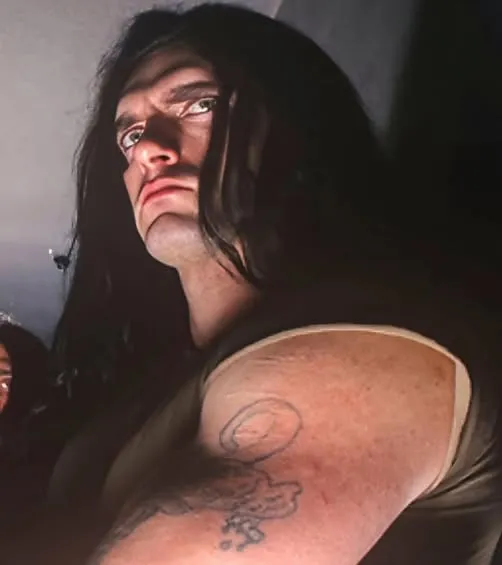
This approach manifested across multiple dimensions of Steele's public persona. His physical presentation - including filed teeth, nude appearances in Playgirl, and guest spots on Jerry Springer discussing groupies - created a carefully constructed mythology around the "Ultimate Fantasy Goth Boyfriend." Yet this image was inseparable from his lyrical content, which frequently centered female pleasure and emotional complexity rather than reducing women to passive objects of male desire.
The band's marketing strategy acknowledged their mass sex appeal while simultaneously grounding that appeal in substantive artistic content. By the time October Rust was released, Steele had achieved what one critic describes as a "potent ménage à trois of 90s pop culture": the Jerry Springer appearance, the Playgirl centerfold, and endorsement from Beavis and Butthead. This cultural saturation paradoxically enhanced rather than diminished the band's artistic credibility, positioning them as genuinely transgressive figures within both metal and mainstream culture.
Sexuality, Menstruation, and Breaking Taboos
Among Type O Negative's most distinctive contributions to metal discourse was their willingness to address menstruation and period sexuality with unprecedented directness. The song "Wolf Moon" from October Rust exemplifies this approach, with Steele referring to menstruation as "unholy water" and a "sanguine addiction" while crafting what amounts to a seven-minute ode to period cunnilingus. This lyrical choice encapsulates the ultimate appeal of Type O Negative: they addressed period shame, an issue that continues to afflict women across generations, with a combination of tenderness and eroticism that validated female bodily experience.
This thematic preoccupation extended the implications of "Christian Woman" into broader territory, suggesting that Steele's artistic project involved systematically desacralizing and reclaiming aspects of female sexuality that religious and patriarchal structures had rendered shameful or forbidden. The juxtaposition of religious imagery with explicit sexuality created a productive tension that resonated deeply with listeners navigating their own conflicts between inherited religious values and contemporary sexual identity.
Legacy and Cultural Impact
"Christian Woman" and the broader body of work it represents occupies a complicated position within metal history and feminist discourse. The song emerged during a pivotal moment for feminism, bracketed historically by the Anita Hill trial in 1991 and the Clinton-Lewinsky scandal of 1998 - both events that crystallized conversations about power, sexuality, and institutional accountability. Type O Negative's music provided a cultural space where these conversations could unfold through the language of gothic romance and metal intensity.
The track's enduring resonance speaks to its emotional authenticity regarding love, identity, and the struggle to reconcile competing desires and values. For listeners - particularly women - who felt alienated by both mainstream culture and traditional metal's masculine posturing, "Christian Woman" and Type O Negative's broader catalog offered validation and representation. The band's willingness to center female pleasure, acknowledge female fantasy, and treat women's sexuality as worthy of artistic attention represented a genuine departure from metal convention.
However, this legacy remains contested. Steele's lyrical catalog also contains documented instances of misogyny, homophobia, and racism that complicate any straightforward feminist reading of his work. Later albums demonstrated greater introspection and maturity, with songs like "Todd's Ship Gods (Above All Things)" examining how patriarchal conditioning shaped masculine identity. Yet the earlier work, including much of Bloody Kisses, reflects the contradictions and limitations of Steele's artistic vision during a formative period.
Conclusion
"Christian Woman" endures as a significant artifact of 1990s metal and popular culture, representing a moment when heavy metal engaged seriously with feminist discourse and female desire. Peter Steele's artistic project - flawed and contradictory as it was - created space for conversations about sexuality, spirituality, and gender that mainstream culture largely avoided. The song's opening invocation of forgiveness, its exploration of transgression, and its underlying acknowledgment of female agency continue to resonate with listeners navigating their own conflicts between inherited values and contemporary identity. Whether viewed as genuinely progressive or as a more complex negotiation of male fantasy and female representation, "Christian Woman" remains essential to understanding both Type O Negative's significance and the broader cultural landscape of 1990s metal.