Last updated:
Peter Steele's Vocal Range:
The Deep Baritone of Gothic Metal
Peter Steele's journey into music began in the gritty streets of Brooklyn, where he honed his skills amid the thriving New York heavy metal scene of the 1980s. Before Type O Negative, he fronted the short-lived heavy metal band Fallout and then Carnivore, a thrash metal outfit known for its aggressive riffs and Steele's already commanding baritone
How Peter Steele Found His Voice in Brooklyn
Steele's influences were eclectic: he often cited Black Sabbath's Ozzy Osbourne for doom-heavy inspiration and The Beatles for melodic sensibility. These roots informed his compositional style, merging Sabbath's sludgy riffs with pop-like hooks delivered in his impossibly low register. By the early 1990s, as Type O Negative emerged, Steele's voice had evolved into a weapon of gothic seduction - rich, velvety lows that evoked a vampire's whisper, punctuated by sudden bursts of intensity.
The Anatomy of a Bass-Baritone Legend
Classifying Peter Steele's voice sparks debate among vocal analysts. Predominantly labeled a bass-baritone, his timbre sat at the lowest end of the male vocal spectrum, dipping into true bass territory with notes like F♯1 and A1 that rumbled like thunder. His absolute lowest documented studio note is D1, achieved in Type O Negative's cover of Black Sabbath's "Black No. 1," while live recordings from the 1999 Bizarre Festival capture him reaching F♯1 to E5 in a single performance. Unlike tenors who dominate rock radio, Steele's strength lay in the second octave (roughly C2 to B2) and below, where he crafted melodies with a soulful, dramatic weight. He seamlessly flowed "from mid-bass range to the higher end of baritone," creating "fantastic dynamics in each song," as one admirer noted.
Yet Steele was no one-note wonder. His documented range extended upward to E5, with comfortable projection into the mid-fourth octave (around G4). In live settings, such as the 1999 Bizarre Festival performance of "Are You Afraid," he plunged to a "beefy A1" before surging to A4 and a quick B♭4 - three octaves in under 30 seconds. That concert alone spanned F♯1 to E5, a testament to his versatility. His approach to highs was "very dramatic and soulful" up to G♯4, turning "screamy and rough" beyond that, yet retaining power. Songs often climaxed with melodies arcing two octaves or more, starting in the low second octave and peaking in the upper fourth.
This range wasn't just technical; it was expressive. Steele utilized his lows "in almost every song," singing "dozens of melodies all over the second octave, and a handful... down into the first." His delivery carried "strong emotion and passion," making even dirge-like tracks pulse with life. Whether crooning somber interludes or roaring anthems, his voice remained "always powerful and very heavy, not something that can ever be missed."
Type O Negative: Where the Voice Met Gothic Metal
Formed in 1989 from Carnivore's ashes, Type O Negative's debut, Slow, Deep and Hard (1991), fused thrash aggression with doom metal, born from Steele's personal turmoil. He wrote the music in one night after a breakup, channeling heartbreak into lyrics about revenge and suicide - echoing his own October 15, 1989, suicide attempt: "I slashed my wrists. All I can say is that I fell in love with the wrong person." Tracks like "Unsuccessfully Coping with the Natural Beauty of Infidelity" highlighted his baritone's mocking sneer over plodding riffs.
The band's breakthrough came with Bloody Kisses (1993), where Steele's vocals defined gothic metal's blueprint: slow tempos, orchestral swells, and ironic humor wrapped in vampire goth aesthetics. Songs like "Black No. 1" featured his voice gliding from bass growls to melodic highs, blending horror-romance with self-deprecation. Later albums like October Rust (1996) and World Coming Down (1999) refined this, with Steele's "finest vocal performance" shining on the opener "White Slavery." Its "crushing dirge-infected riff" paired with his "crushing" lows peered "into the soul of Peter Steele himself," while quieter moments delivered "the most memorable... somber and quieter interludes."
Fans rank his performances highly: polls highlight "Christian Woman" for its erotic lows-to-highs arc, "Everything Dies" for raw power, and live renditions of "Love You to Death" where his baritone mesmerized crowds. Through it all, Type O Negative's "towering, bass-hoisting, baritone-voiced frontman was singularly breathtaking the second he opened his mouth."
Signature Techniques and Innovations
Steele's genius lay in integration. He didn't just sing low; he built songs around his range, making the bass-baritone the melodic core. In "White Slavery," his voice floats powerfully across registers, turning devastation into beauty. Dynamics were key: seamless transitions from whispery bass to belted mids created tension-release cycles perfect for gothic metal's brooding atmosphere.
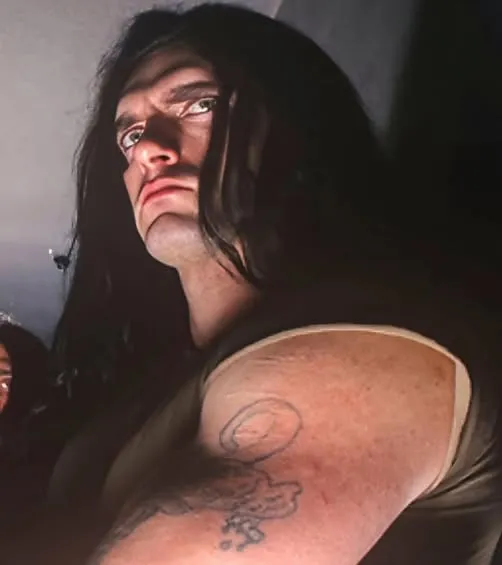
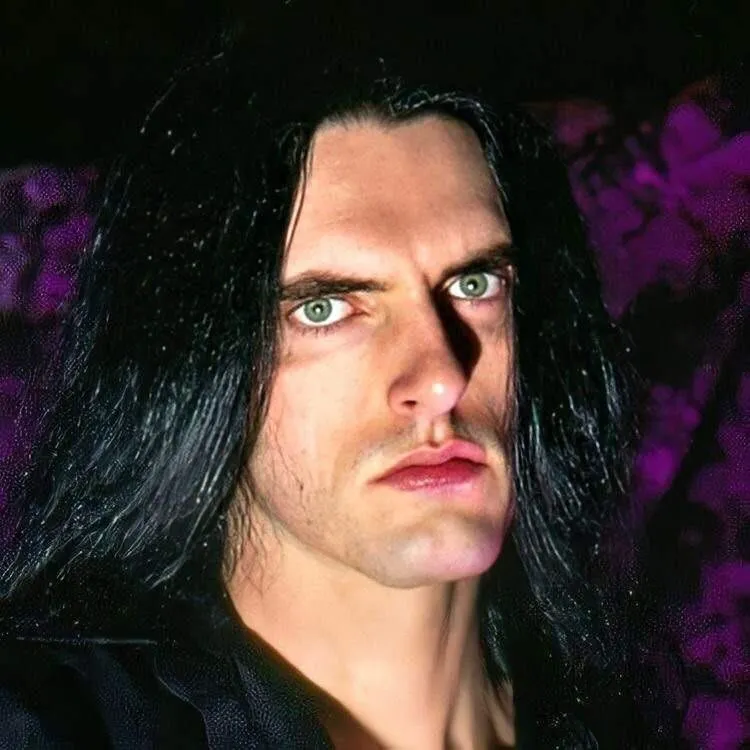
Live, his vampiric stage persona amplified this - long black hair, corpse paint, and that 6'8" frame looming over a bass rigged with skull motifs. His "rich bass vocals" cut through reverb-heavy mixes, often layered with keyboards for a funereal depth. Lyrics delved into "intensely personal" themes - love, loss, addiction - delivered with dark humor, like mocking his own addictions in "Bad Blood."
Vocal health was miraculous given his habits; despite substance struggles, his tone stayed consistent, though later years showed slight huskiness. Analysts note he sounded like "the lowest type of male voice," blurring bass-baritone lines, yet his highs proved he was no pure basso profundo.
Influence and Legacy in Gothic Metal
Peter Steele's voice redefined gothic metal, predating and outshining nu-metal baritones like Jonathan Davis or later acts like Him. Type O Negative's sound - gothic doom with pop accessibility - inspired bands from Paradise Lost to Lacuna Coil. His baritone became synonymous with the genre: deep, seductive, and unafraid of melody amid heaviness.
Posthumously, Steele's impact endures. He's listed among the "66 Best Hard Rock and Metal Frontmen of All Time" by Loudwire, praised for "dark, often self-deprecating" humor and personal lyrics. Fans cherish vocal compilations showcasing his range, from F♯1 growls to E5 screams. Tributes emphasize: "Though there will never be another like Steele, his fans... will be sure to never let his memory die out."
Steele's death from heart failure at 48 silenced a unique force, but his vocal legacy - the deep baritone that defined gothic metal- resonates eternally. In an era of shredding tenors, he proved depth conquers, crafting anthems that still chill spines and stir souls.
(Word count: 1,128)