Last updated:
The Beginning of the End
At times I'm truly terrified
'Cause dope and booze don't help to hide
They're used to mask a weakling's hurt
It's just like painting over dirt
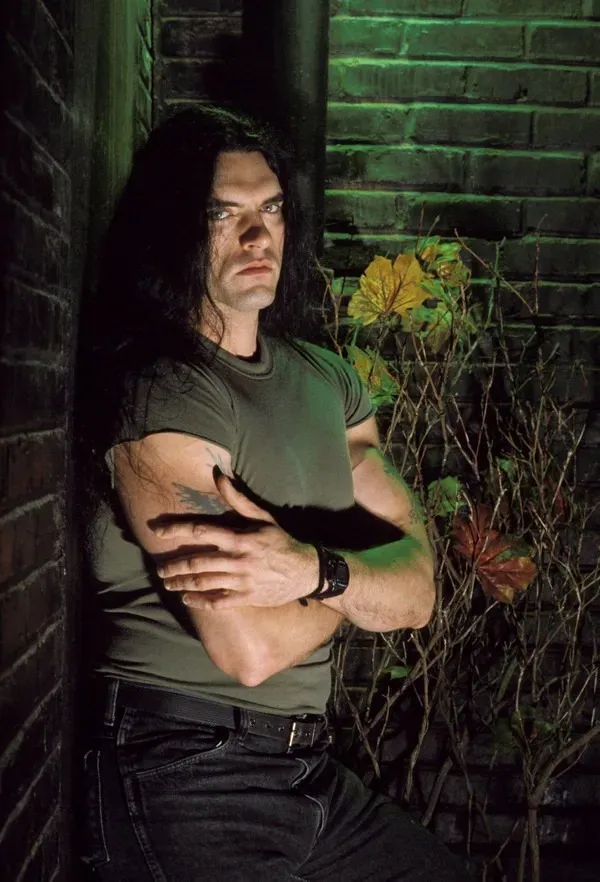
Peter Steele's career in the 1990s could be summed up by a quote often misattributed to Winston Churchill: "Success is not final, failure is not fatal: it is the courage to continue that counts."
Success Is Not Final
Peter could very well have identified with these words in 1999. What is defined as success was not what motivated him to move forward. He no longer wished to enjoy its advantages, except perhaps the money, which for him was increasingly synonymous with freedom. But he was not skilled at financial management. He did not want to embark on more touring, even though the 1999/2000 tour had been one of the most extensive he had done with Type O Negative.
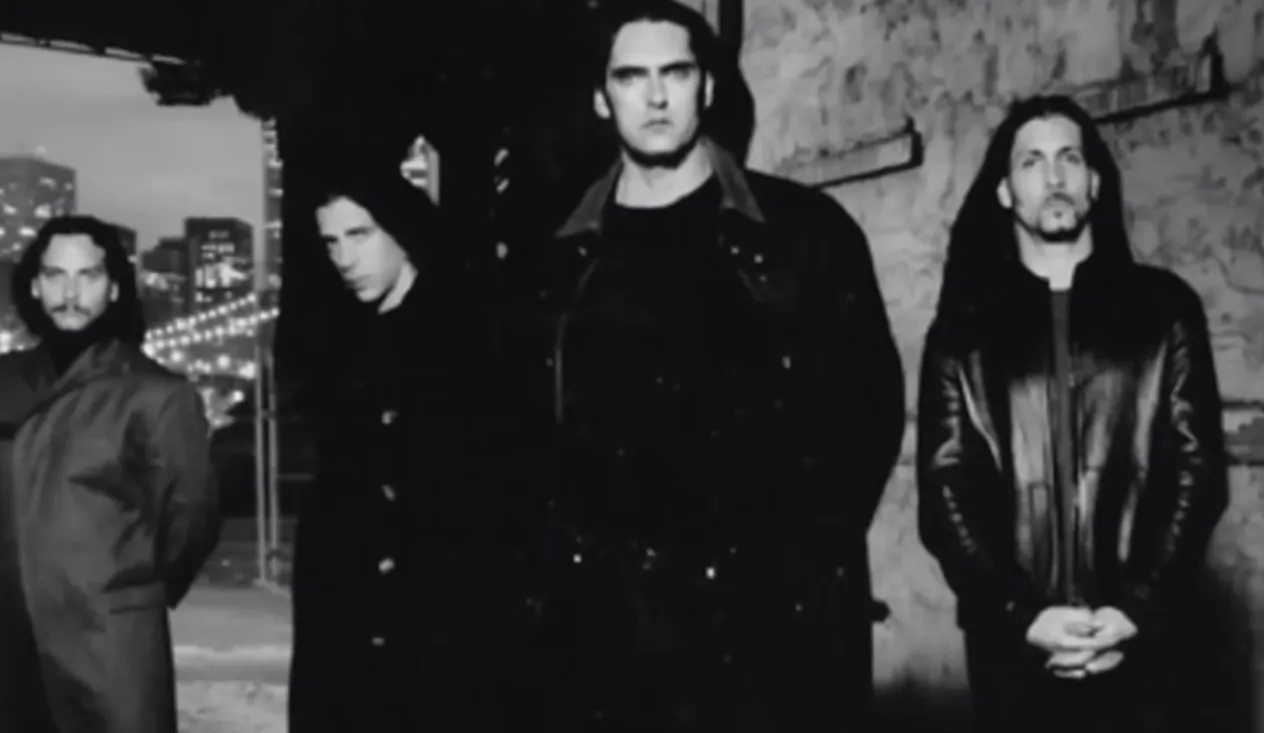
What drove him to continue was that he and his bandmates had made the group a musical institution, a creative enterprise with a direct impact on thousands of people around the world. He felt responsible to these ever-growing fans. And he felt responsible to Josh, Kenny, and Johnny, who had no intention of changing their lifestyle. For them, it was not only a satisfying artistic activity but above all a great job.
And even if it was Peter's deepest wish, no one would have let him return to a life as a simple municipal employee, which did not stop him from talking about this whim to anyone who would listen, after the release of October Rust. What choice remained for him but to continue the Type O Negative adventure? Despite all the problems and challenges inherent in this profession, amplified by his own inner conflicts, Peter had to push straight ahead. And with this unstable inner universe, where lack of confidence and depression reigned supreme, it was courageous of him.
Fame and recognition were a burden he found painful to bear, even though he appreciated the passion and applause of fans and media who understood the essence of Type O Negative's art. He remained humble about his accomplishments, but always seized any opportunity to belittle himself through humor.
He often opened his wallet as well. He signed many checks to finance the weddings and housewarming gifts of his friends, as Mark Martin and Stan Pillis can attest, even if it embarrassed them. He lent a huge sum of money to a former member of his band, and when that person was slow to repay him, Peter preferred to remain silent rather than bang his fist on the table. He financed out of his own pocket the purchase of a tour bus intended to carry his workout equipment, so that it would not take up space in the band's bus. And a good portion of his earnings ended up in his nostrils, by his own admission.
But despite the money, drugs, success, and excessive generosity, Peter had not fundamentally changed in personality. He was still the same, and everyone agrees to confirm this. He had simply added a few new unhealthy habits to his heavy burden.
When Type O began to become known in the early 1990s, Peter erected barriers around himself, determining to what extent he wanted to preserve his private life. Over the years, he had to redraw these boundaries. It was a frustrating and exhausting exercise. He would have preferred to avoid doing it, but his art required many precautions. If he wanted to continue playing and composing music, he would have to conform to the demands of the record industry. Of course, it was in his nature - just as it was in the nature of his co-pilot Josh Silver - to find ways to short-circuit the machine.
"He Never Seemed Truly Comfortable"
"He never seemed truly comfortable." Howie Abrams worked at Roadrunner as a product manager and A&R. He had known Peter long before the fame, and as a fan of Carnivore, he had seen them play live in the 1980s. He had seen Type O Negative explode with the successes of Bloody Kisses and October Rust. He recounts:
"Imagine this guy who was uncomfortable wherever he went, at least in public, and who made efforts to make himself known with his records. From what I could see, his attitude changed. He was judged, his creations were criticized, people gave him their opinions on what he should do and what he should change. He didn't like operating in this atmosphere, and yet he was exposed to everyone's view. He was always the same, with that sarcastic humor and that teasing side, but now he was locked in a fishbowl. People spied on him from all sides. He was very careful to reserve moments of intimacy for himself."
The Demons Came With Success
Mark Abramson felt the pressure mounting around Peter and the rest of Type O very palpably toward the end of the 1990s. He explains:
"The demons came with success. That often happens in Rock 'N' Roll, and it happened with October Rust. Drugs entered the equation, and Peter began to neglect his dumbbells and his draconian diet. He was still just as gigantic, but he was beginning to let himself go physically."
Pure Vanity
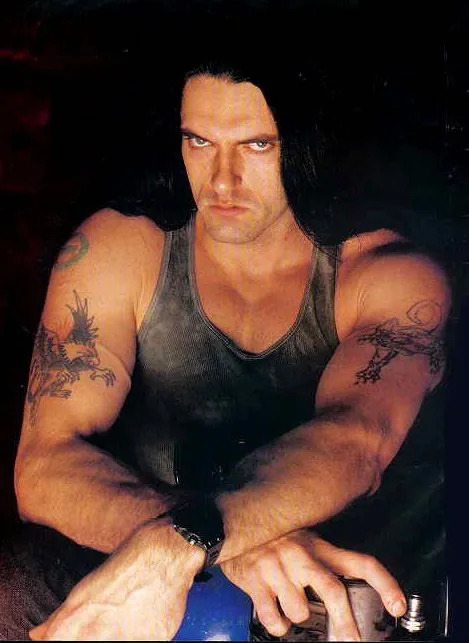
Peter's obsession with bodybuilding and dietetics had begun more than ten years earlier. In addition to the health advantage it ensured him, training reinforced his self-esteem and helped him better manage his complexes. He described bodybuilding as "pure vanity," and the consequence of a "poor self-image." He had started getting into it because he felt "like shit my whole life because of my height. As a kid, I was rather chubby. I was a walking punching bag. I was already tall, but I didn't know how to fight. I looked like I was fifteen when I was ten. I was introverted, playing with my electric train in the basement. At age fifteen, something happened - my balls got huge, I gained a foot and about a hundred pounds more, but it wasn't fat. Those who made fun of me became my best friends."
Dumbbells on the Tour Bus
As the new millennium approached, bodybuilding took such an important place in Peter's life that he insisted on bringing his dumbbells on tour. Despite the drinking and debauchery, he did his best to follow a routine in the chaotic universe of the tour bus. Since it was impossible for him to bring his cats with him, the dumbbells were a familiar element that helped him feel at home.
Over the course of their friendship, Phil Anselmo of Pantera found common ground with Peter on many levels. One of the most significant was their shared obsession with fitness - which was all the more arduous given that the temptations of life on the road were liable to destroy their gains.
"He was at a much higher level than me. He lifted much heavier weights than me. The only thing we both did was focus on the upper body, neglecting the lower body. We had huge arms, but skinny legs. He was gigantic, with enormous pectorals and biceps as big as my skull, and scrawny legs molded into tight black jeans. At the peak of his form, Peter could chug three cans of Slim-Fast. He downed them in one gulp. And the funniest thing I saw him do was when he went to the back of the tour bus and opened the windows so everyone could see inside, then he made sure to have a good erection, and he started working his biceps with a fully loaded barbell, his huge dick swinging half-erect between his legs. It was a shocking spectacle, and very funny. And it made him laugh. Everything he did in life was deadpan."
The Humor Stayed Razor-Sharp
"Humor" is a word that comes up often from those who knew him daily, and he kept his sense of derision razor-sharp throughout his career. Even though his environment had changed greatly between the early 1990s and the early 2000s, he tried to keep his sarcasm and his legendary "goy" kindness from the streets of Brooklyn. Even though limousines came to pick him up at his family home to take him to the airport at the start of each tour, he still piloted his terrible Buggy of the Apocalypse through the streets of the neighborhood. And when fans honked in front of his windows to say hello, he took the trouble to have an official municipal sign erected at the beginning of Eighteenth Street, with written on it: "NO HONKING! $500 FINE!"
"He Never Acted Famous"
Mark Martin knew only one Peter: the kid Ratajczyk who became famous long after they had known each other. He recounts:
"He's a guy you could never have believed was famous just by looking at him. He never acted like one. The only time he played that role with me was when I bought the house I currently live in. He came over to give me a gift. He leaned over to sign a check. He told me, 'I want to give you a housewarming gift.' I replied, 'You came all the way here, that's already a beautiful gift.'"
What His Sisters Saw
Despite the fame, Peter's sisters did not see him change one iota, aside from a few minor differences:
"He didn't change to the point of getting a big head, but he was much more stressed. People often tried to rip him off. That changes a man. It makes you grow up very fast, which isn't necessarily a good thing. That's life, we get taken advantage of, you know the drill? But that didn't stop him from being very generous."
"He Kept His Problems to Himself"
Sophia Fry from Roadrunner notes that:
"Peter didn't choose to move or change his little habits. He still lived in Brooklyn, with his family, in the basement. He didn't buy nice cars. He was always the same guy. He didn't buy designer clothes. I don't think celebrity changed him. I hope he understood that he had a gift and that their band was really very good. I hope he understood how important Type O Negative was, and how many fans they had. Their fan base really grew with Bloody Kisses and October Rust, but I don't think it really affected him. He mostly wanted to give the best of himself. That's what stressed him out. He had inner conflicts, that we know. But he kept his problems to himself, and only expressed them through his art."