Last updated:
Peter Steele's Religion & Faith:
From Catholicism to Dark Lyrics
Peter Steele grew up in the working-class Bay Ridge neighborhood of Brooklyn, the youngest of six children and the only boy in a Polish-Italian family steeped in Roman Catholic tradition. His parents, a schoolteacher mother and a factory-working father, instilled a rigorous faith from infancy. Steele was baptized, received his First Communion, and
Early Life in a Catholic Household
In interviews, Steele often recalled the intensity of his Catholic indoctrination. "I was raised Catholic, very strict Catholic," he once said, describing how family life revolved around Mass, confession, and saintly icons. As the sole son among five sisters, he received preferential treatment, which he later credited with fostering both a sense of entitlement and isolation. This dynamic, he suggested, amplified his internal conflicts over sin and salvation - conflicts that would echo through his music.
Yet, even as a child, Steele questioned dogma. He spoke of early doubts about hellfire sermons and the church's stance on sexuality, themes that foreshadowed his adult persona as a gothic anti-hero. By his teens, immersed in heavy metal and punk scenes, these seeds of rebellion took root, pulling him away from the altar toward darker explorations.
Descent into Darkness: Atheism, Drugs, and Satanic Imagery
As Type O Negative formed in 1989 from the ashes of Steele's prior band, Carnivore, his lyrics plunged into gothic horror, blending horror movie tropes with personal torment. Albums like Slow, Deep and Hard (1991) and Bloody Kisses (1993) featured songs laced with blasphemy, necrophilia fantasies, and anti-religious barbs. Tracks such as "Christian Woman" depicted a nun's erotic visions of Christ, while "Black No. 1" mocked goth subculture's flirtation with the occult.
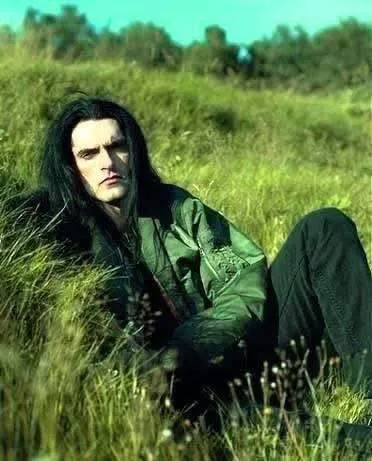
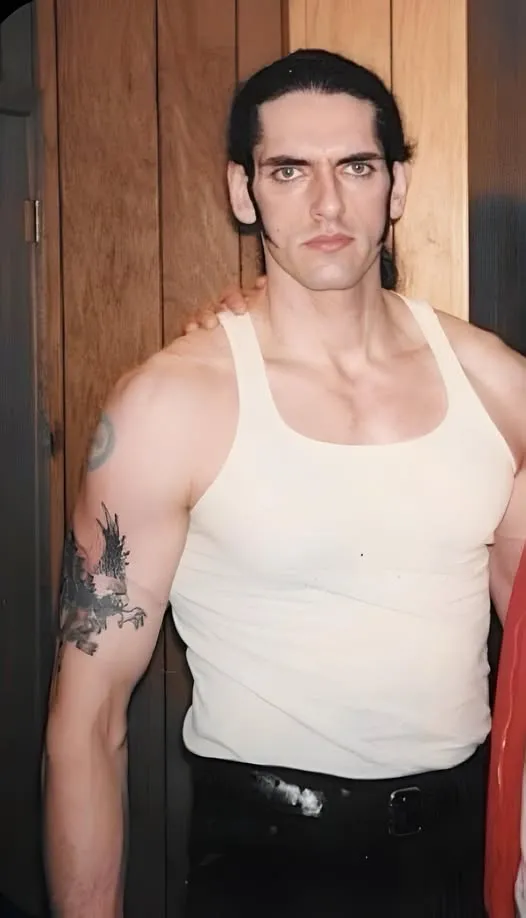
Steele's public image amplified this: at 6'8" with a bodybuilder's physique, green hair, and corpse paint, he embodied a "green man" of pagan excess. He dabbled in atheism, declaring in the '90s, "I don't believe in God," and toyed with Satanism for shock value. Lyrics from a rare version of "Everyone I Love Is Dead" on the 2000 compilation The Least Worst Of- sung from Lucifer's perspective - captured his nihilism: "A dusty stack of photographs / of times I cried - but mostly laughed / commit the past - into blue flame / acrid smoke - cowardly shame." Here, Steele masked vulnerability with demonic bravado, admitting, "At times I'm truly terrified / cause dope and booze - don't help to hide / they're used to mask - a weakling's hurt / it's just like painting - over dirt."
This era's dark lyrics weren't mere provocation; they stemmed from real pain. Steele battled heroin addiction, failed relationships, and depression, using humor and horror to process loss. "Everyone I love is - dead - everyone I love is - dead - all dead," he wailed, reflecting suicides and overdoses among friends. His Catholic guilt fueled self-loathing, evident in lines like "I love myself for hating you," a twisted confession of pride as the deadliest sin.
Critics and fans debated whether Steele truly embraced Satanism or wielded it as metaphor. He posed nude for Playgirl in 1995, embracing hedonism, and Carnivore's Retaliation (1987) raged against organized religion. Yet, beneath the theatrics, flickers of faith persisted - hints of a man grappling with eternity amid Brooklyn's shadows.
The Abyss: Rock Bottom and Spiritual Void
By the early 2000s, Steele hit nadir. Type O Negative's World Coming Down (1999) chronicled his addictions, with songs like "Everyone I Love Is Dead" laying bare despair. Arrested multiple times for drug possession and DWI, he ballooned to over 300 pounds, his health crumbling. In a 2003 interview, he admitted contemplating suicide, echoing lyrics from October Rust (1996): "Life's a game I cannot win / both good and bad - must surely end."
This period marked peak estrangement from faith. Steele mocked Christianity in media, aligning with metal's anti-clerical tradition. His lyrics invoked vampires, witches, and hell, but rarely redemption. Fans saw Peter Steele's religion as performative atheism - a shield against vulnerability. Privately, however, the Catholic imprint lingered; he later revealed childhood fears of damnation haunted his binges.
Road to Redemption: Conversion and Return to Faith
Steele's turnaround began around 2006-2007, amid Type O Negative's Dead Again (2007) tour. Sober after rehab, he experienced a profound spiritual awakening. In a pivotal 2008 appearance on The Howard Stern Show, he announced his conversion to Christianity, specifically Roman Catholicism. "God has a plan for everybody," he declared, his baritone softened by sincerity.
What sparked this? Steele cited a quest for cosmic justice. "One thing that helped bring me to Christianity was the conviction that there had to be some justice in life beyond this world," he explained. "Someone like Stalin or Hitler just couldn't wind up in the same place as Mother Teresa." This echoed Catholic theology's emphasis on divine judgment, resonating with his upbringing. He attended Mass regularly, prayed the Rosary, and credited faith with sustaining sobriety.
Talk shows buzzed with his transformation. On The Opie & Anthony Show, Steele discussed confession's healing power, contrasting it with his past excesses. Dead Again's title track blended apocalyptic imagery with pleas for mercy: "The blood we spilled / it never dries / dead again." Fans noted a shift - less vitriol, more introspection. Steele even expressed regret over earlier blasphemy, viewing his dark lyrics as a "prodigal son" phase.
His return wasn't flawless. Skeptics questioned its authenticity, citing metal's history of ironic piety. Yet Steele's actions spoke: he volunteered at church, mentored youth, and embodied penance through fitness and charity. "I'm a Roman Catholic now," he affirmed shortly before his death, bridging his origins with hard-won grace.
Lyrics as a Mirror of Faith's Evolution
Steele's discography traces his spiritual arc like a confessional. Early works (Slow, Deep and Hard) revel in sacrilege: "Gravitational Constant: G = 6.67 x 10^-8 cm-g sec^-2" parodies physics and God. Mid-period (Bloody Kisses) probes eroticism and death, with "Summer Breeze" twisting folk innocence into necrophilic longing.
Post-conversion, subtlety emerged. Dead Again confronts mortality head-on: "I feel it in my bones / dead again." The Lucifer-sung "Everyone I Love Is Dead" (from the 1996 single "My Girlfriend's Girlfriend") now reads as prelude to repentance - Steele's "acrid smoke - cowardly shame" prefiguring absolution. Even covers, like his Black Sabbath tribute, infused personal theology.
Critics hail this evolution as authentic. His dark lyrics, once weapons against faith, became bridges back to it - testaments to a Catholic soul's resilience.
Legacy: A Prodigal Rocker's Enduring Witness
Peter Steele died on April 14, 2010, in his Scranton, Pennsylvania, apartment, ruled a heart failure exacerbated by years of abuse. At 48, he left Type O Negative's catalog as gothic metal's pinnacle, but his faith story endures as counter-narrative to rock's clichés.
Tributes poured in, with Catholic blogs celebrating his return: "Shortly before his death, Peter Steele converted to Christianity and even claimed to be a Roman Catholic." Friends confirmed his devotion; bandmate Kenny Hickey noted Steele's Bible-reading final days.
Steele's journey - from Brooklyn altar boy to satanic bard to repentant Christian - mirrors humanity's spiritual flux. His lyrics, raw and revelatory, invite listeners to confront their shadows. In death, he achieved the justice he craved: not infamy, but inspiration. For fans dissecting Peter Steele's religion & faith, it's clear: even in darkness, light persists.
(Word count: 1,128)