Last updated:
Peter Steele's Bass Guitar:
The Instruments That Shaped His Sound
Steele's bass journey began in the early 1980s with bands like Aggression and Carnivore, where he sought a heavy, sustained tone amid punk and thrash influences. His rig stabilized during Type O Negative's rise post-1991's Slow, Heavy, and Bronze.
Historical Context and Timeline
- Pre-Type O Negative (1980s - early 1990s): Used an *Alembic Spoiler bass (burl finish), seen in an American Nightmare interview (Carnivore documentary, ~1990); missing its neck pickup. Also owned an Aria APE bass*, influencing his early effects choices.
- Early Type O (1991-1994): *Washburn M10 bass (black with green fittings)* became a staple. Early Peavey 8x10 and 2x10" cabinets formed his core setup during tone experimentation.
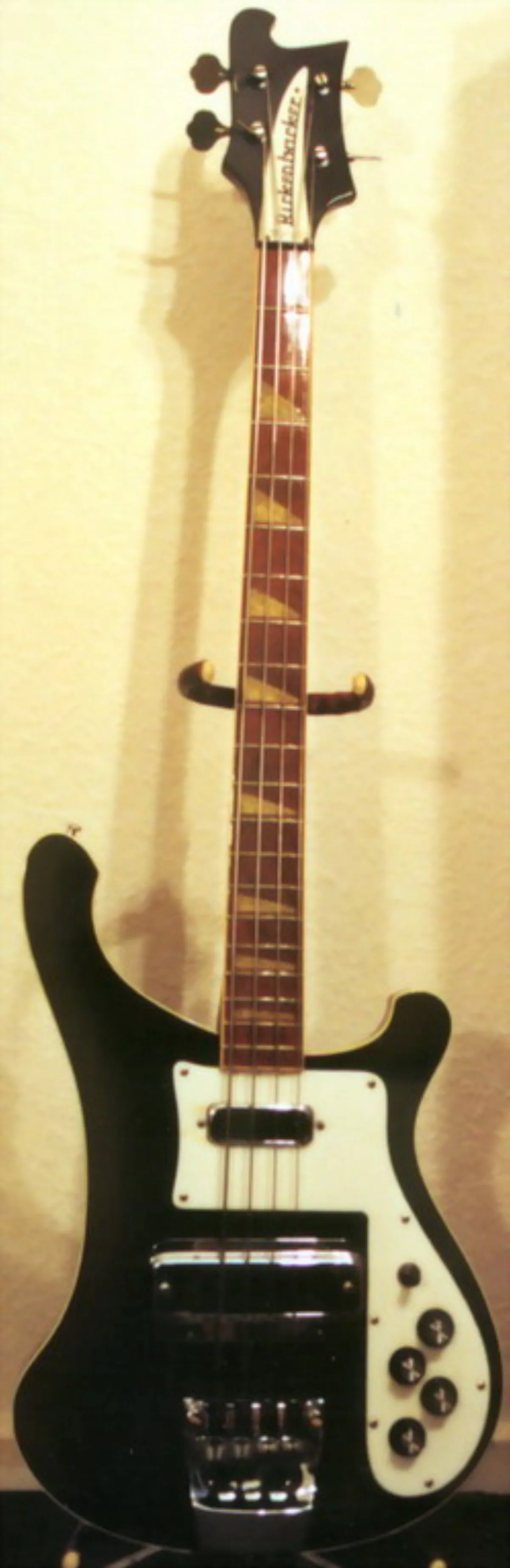
- Mid-1990s Peak (1995-1997): Switched to *ESH Stinger basses (black with green accents) as his trademark, used live from June 1995 through October Rust (1996) recording and tours; custom "Green Man" Stinger homage later produced by ESH. Fernandes Tremor 4-string (green) and custom "Steele Bass" (Rickenbacker/Fernandes fusion)* featured electromagnetic bass driver (sustainer) at the neck for infinite sustain, integral to his tone per Steele.
- Late Career (2001-2010): Exclusive use of limited-edition *Fernandes "Steele" model* (2001-2003 production, ~single MusicMan-style bridge pickup, Fernandes toggle switches); played until his final 2009-2010 performances.
Steele's sound - deep, fuzzy sustain with gothic doom - defined albums like Bloody Kisses (1993), October Rust (1996), and Dead Again (2007), blending low-end growl and feedback.
Key Instruments and Rig Details
Amps and Effects (Consistent 1990s - 2000s): Peavey Tour 700 head with 4x10/1x15" Tour series cabs (core from early days); Boss pedals in series: DS-1 Distortion, CH-1 Super Chorus, DD-3 Digital Delay (sometimes DD-3 before CH-1; rack tuner with Bassist preamps). Clean tones via Marshall Y-box to tremolo/reverb. 1998 Bass Player quote: "through a series of Boss pedals: distortion, chorus, and delay for his normal heavy tone. When he wants a clean sound, a Marshall Y-box re-routes the signal through Boss tremolo and reverb pedals." Early Aria APE informed pedalboard. Unverified: 1996 Livewire volume pedal for feedback.
Zon basses acknowledged in sleeves but unphotographed/confirmed live.
Direct Quotes
- On Fernandes sustainer: Peter claimed the rare electromagnetic neck driver was "integral to his tone."
- 1998 Bass Player Magazine: Detailed Boss/Marshall Y-box setup above.
No direct bandmate quotes in sources, though Kenny Hickey (guitarist) used similar sustainers post-Fernandes.
Lesser-Known Facts
- Fernandes "Steele" limited to 2001-2003; his had unique wider neck pickup and prototype sustainer (per Type O message boards).
- ESH Stingers loaded Peavey cabs on tour risers for massive low-end.
- Early 8x10 Peaveys used while "hunting his sound."
- Posthumous ESH "Green Man" Stinger replicates his custom; he played multiple ESH models.
- Mini Steele bass replicas (10") produced in limited runs of 500.
Pedal Settings and String Setup
Steele's pedalboard settings, documented from live photos with knobs glued in place using hot glue, were dialed in for maximum impact:
- Boss DS-1 Distortion: Tone 3, Level 10, Distortion 10 - labeled with a "Distort" sticker
- Boss CH-1 Super Chorus: Effect Level 10, EQ 10, Rate 6, Depth 10
- Boss DD-3 Digital Delay: Effect Level 4.5, Feedback 6, Delay Time 5, Mode L.800ms
- Strings: Rotosound extra medium gauge (.050-.110), chosen for the thick low-end required by Type O Negative's signature tone
Misconceptions Corrected
- Not always Alembic-exclusive: Often cited for Alembics, but ESH Stingers defined mid-90s trademark sound, not just Alembics.
- Sustainer myths: Not standard Sustainiac; custom Fernandes electromagnetic driver (rarer, more powerful; ASB-100 standard). Album tones likely matched current endorsements, not fixed basses.
- Pedal order rumors: DD-3 often before CH-1 (not always reverse); no consistent TU-2; volume pedal unverified.
- Zon usage: Sleeve credits exist, but no visual/live proof - likely minor or absent.