Last updated:
How to Get Peter Steele's Bass Tone:
Settings, Gear & Technique
This guide draws on verified gear lists, pedalboard breakdowns, and player testimonials to deliver a step-by-step blueprint. Whether you're chasing the epic riffage of "Black No. 1" or the brooding pulse of "Christian Woman," you'll dial in Steele's tone with accessible modern equivalents.
Peter Steele's Bass Guitar Setup: The Foundation
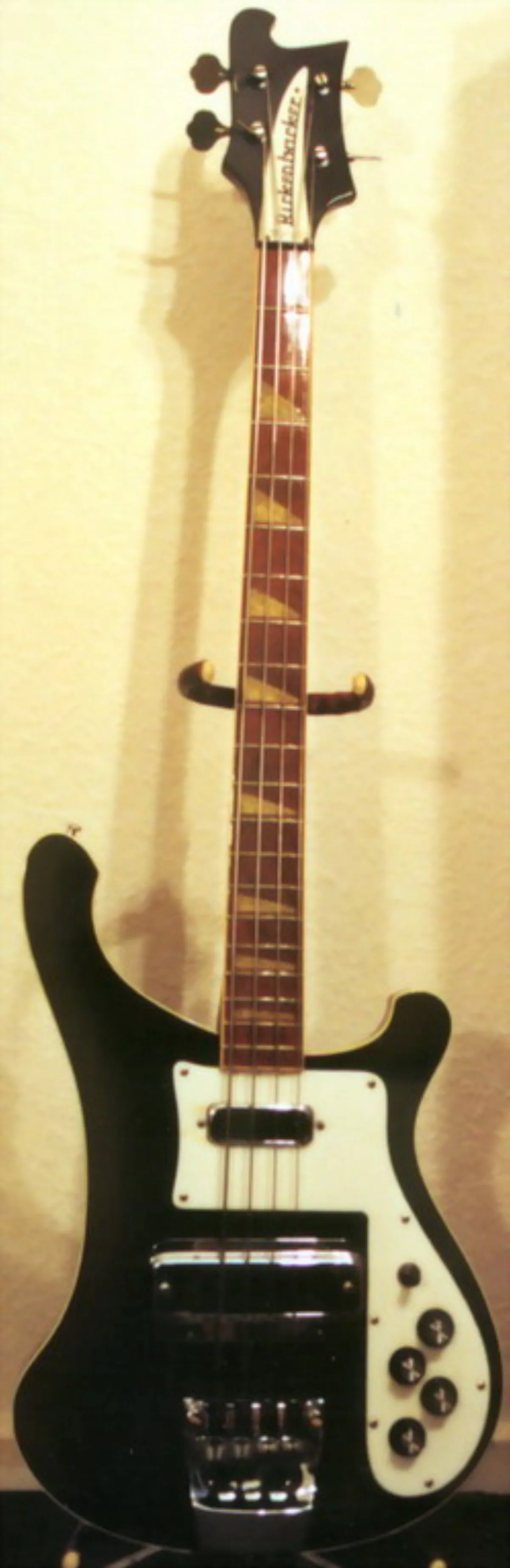
Steele's basses were workhorses built for abuse, favoring Fernandes models loaded with unique pickups. He primarily wielded custom Fernandes basses, often the rare ASB-100 or similar burner models, fitted with an electromagnetic bass driver in the neck position. This sustainer-like pickup - distinct from later Sustainiac units on Kenny's Schecters post-2007 - provided endless sustain and harmonic richness, which Steele deemed "integral to his tone." He tuned them to B-E-A-D, a dropped four-string setup mimicking a five-string's low B without the extra string, though some tracks sound further detuned for that coffin-crushing depth.
Key Recommendations for Your Rig:
- Bass Choice: Start with a four-string like a Fernandes Burny or any humbucker-equipped axe (EMG actives work well for DS-1 compatibility). Avoid passive single-coils - they mud under distortion. For authenticity, seek a neck sustainer mod, but it's optional for studio recreations.
- Strings and Picks: Heavy gauge strings (likely .050-.110 or thicker) to handle B tuning without flop. Steele used Dunlop Tortex 0.50mm picks - thinner than most bassists' choice - held unusually for strumming like a guitar.
- Tuning: B standard (B0-E1-A1-D2). Use a reliable tuner; Steele skipped floor pedals in racks, opting for rackmount units.
This low-end foundation ensures your tone rumbles like Steele's, cutting through dense guitar walls.
Essential Effects Pedals: Distortion, Chorus, and Delay
Steele's "huge amount of distortion" came from the Boss DS-1 guitar pedal - a cheap, finicky overdrive that squeals into feedback heaven. Paired with Boss Super Chorus (CH-1) and Digital Delay (DD-3), it formed his core chain. Pedal order: DS-1 first, then CH-1, DD-3 last (sometimes with a volume pedal for feedback taming, per a 1996 Livewire interview repost). He ran this for both Type O Negative and Carnivore, from clubs to arenas.
From a 1998 Bass Player Magazine interview: Steele described running his bass "through a series of Boss pedals: distortion, chorus, and delay for his normal heavy tone. When he wants a clean sound, a Marshall Y-box re-routes the signal through Boss tremolo and reverb pedals."
Pedal Settings for Steele's Signature Sound:
Pro Tip: The DS-1 isn't bass-optimized; for bedroom/epic tones, swap to Boss MT-2 Metal Zone (MT-2). Set Low EQ: 2 o'clock, High EQ: 9 o'clock, Dist: 1 o'clock, Middle: Scooped, Level: Unity. It adds "fuzzy sustain" and "brutal palm mutes," outperforming DS-1 for non-live use.
Add-ons like BBE Sonic Stomp (for highs sparkle) or Strymon Polara reverb (Hall mode) enhance without altering the core. Skip sustainers unless emulating early Fernandes eras - Steele ditched them live post-2003.
Amp and Cab Settings: Power and Punch
Steele favored Ampeg SVT setups, blending solid-state preamps for bite. His rack featured the Ampeg SVT-MAX preamp (100% solid-state blend, no tube warmth) into power amps, driving custom cabs. Top/bottom MAX units mirrored knobs: identical across EQs for consistency.
Dial-In Settings:
- Preamp (SVT-CL or MAX): Blend: Full SS; Bass: 1 o'clock; Mid: 11 o'clock (scooped); Treble: 2 o'clock; Gain: Drive edge.
- Master Volume: Crank for natural compression.
- Cab: 8x10 or 4x10 with Eminence speakers (bypass crossovers if modded - avoids "wet blanket" effect). Speakers were his live tone secret.
For home rigs, an Ampeg BA-115 or Peavey combo works. EQ: Boost lows/mids, cut piercing highs. Run pedals into the amp's effects loop if available.
Technique: Strumming, Muting, and Riffs That Define the Tone
Gear alone won't summon Steele - his playing was guitaristic aggression on bass. He strummed with upstrokes (watch live videos), switching from neck (chords) to bridge (singles) to tame string flop. Picks enabled fluid power chords under distortion.
Signature Power Chord Method:
1. Fret root with index finger, lay it across the next string to mute (no fifth note mud).
2. Fret octave with ring/pinky.
3. Strum all three strings aggressively.
Example on "Wolf Moon" riff: Root + octave only, muted D string. Demos show it transforms thin tones into massive walls.
Riff Styles:
- Descending chromatic scales (e.g., "Creepy Green Light").
- Pedal tones on root/octave with higher-note fills.
- Ghost notes and palm-mutes for groove.
Practice with 0.50mm Tortex: It forgives thick strings, enabling guitar-like speed.
Step-by-Step: Building Your Peter Steele Rig
1. Tune to B-E-A-D on a humbucker bass.
2. Chain Pedals: Bass > DS-1 (or MT-2) > CH-1 > DD-3 > Amp.
3. Set Pedals per table above.
4. Amp EQ: Bass heavy, mids scooped.
5. Play Power Chords: Root-mute-octave strum.
6. Test Riff: "Black No. 1" intro - chorus swells, distortion roars.
Modern Alternatives Table:
Common Pitfalls and Pro Enhancements
- Mud Issues: Cut bass pre-distortion; use actives.
- Feedback: Embrace it - Steele loved the DS-1's howl.
- Volume Scaling: MT-2 shines at low volumes; DS-1 for stage.
- Enhancers: BBE SS-92 or Digitech Metal Master (Bass/Treble dimed, Morph 12 o'clock) for extra sizzle on older amps.
Glenn at Spectre Sound Studios notes distortion diminishes guitar/bass influence - focus on pedals/speakers. Ethan Lawson skips FRV-1 reverb; opt for Polara Hall.
Legacy and Final Thoughts
Peter Steele's tone - born from Brooklyn grit, Fernandes innovation, and Boss simplicity - remains a gothic metal holy grail. As one demo puts it, "You can get a good Peter Steele tone out of pretty much any bass and amp combination" with the right habits. Experiment live; his "Does it sound terrible? This is as good as it's going to get" quip mid-tune reminds us perfection is in the chaos. Dial this in, strum those chromatics, and channel the 6'8" baritone's shadow.
(Word count: 1,128)