Last updated:
Peter Steele's Pedalboard & Effects Pedals:
Complete Breakdown
This breakdown draws from verified gear lists, live footage, photos, and fan-documented settings to dissect Steele's pedalboard. While Steele rarely detailed his rig in interviews, photographic evidence from tours (e.g., Buffalo, March 1994) and community analyses reveal a consistent, no-frills approach that emphasized glued-down knobs for preset t
The Core Pedal Chain: TU-2 > DS-1 > CH-1 > DD-3
Steele's most photographed and replicated pedalboard appeared consistently from the mid-1990s onward, often positioned next to his stage monitor for quick access. This chain - Tuner, Distortion, Chorus, Delay - formed the backbone of his live and studio sound across Type O Negative's career and side projects. The pedals were powered simply, likely via a Boss PSA adapter, and arranged in a logical signal flow: tuning first, then drive, modulation, and time-based effects.
Boss TU-2 Chromatic Tuner (or TU-3 in Later Years)
The Boss TU-2 kicked off the board, ensuring Steele's low-tuned basses (often down to B or lower) stayed locked in. Photos show it as the first pedal in line, a practical choice for a touring musician who favored drop tunings to match his baritone growl. By the 2000s, some sources note a shift to the Boss TU-3, an updated model with similar functionality but improved accuracy.
Earlier in his career, Steele relied on rack tuners like the Korg DTR-1 when using preamp units, but the switch to individual pedals around 1994 prioritized portability. No specific settings are documented beyond standard bypass use, but its placement underscores Steele's emphasis on tuning stability amid feedback-heavy performances.
Boss DS-1 Distortion: The Heart of the Monster Tone
No pedal defines Steele's sound more than the Boss DS-1 Distortion, a budget guitar pedal repurposed for bass with ruthless aggression. Steele cranked it to extremes: Tone 3, Level 10, Distort 10. The knobs appear glued in place with hot glue, preventing accidental tweaks during chaotic live sets. A custom sticker reading "Distort" covers the front panel - possibly Steele's handwriting or a tech's addition - reinforcing its always-on role.
This setup delivered the fuzzy, saturated low-end that powered tracks like "Black No. 1" and "Christian Woman." Live footage from 1994 confirms its use, and Steele employed it across venues, from clubs to festivals. Community recreations, like those on Equipboard and YouTube demos, highlight how the DS-1's mid-focused distortion cut through Type O Negative's wall of sound without muddying the bass guitar's fundamentals. Interestingly, some speculate Steele added a volume pedal post-DS-1 for feedback control, per a reposted 1996 Livewire magazine interview, though this remains unverified.
Boss CH-1 Super Chorus: Swirling Depth
Following distortion, the Boss CH-1 Super Chorus added Steele's signature watery modulation, evoking a massive, detuned choir. Settings were dialed to Effect Level 10, EQ 10, Rate 6, Depth 10, creating a lush, slow sweep that enveloped his riffs. Like the DS-1, its knobs were often glued, locking in the preset.
Photos occasionally show variations in chain order - DD-3 before CH-1 in rack-era setups - but the standard tour board placed chorus after distortion for a smoother, more integrated wash. This pedal's role peaked on October Rust, where Steele's Esh Stinger bass through CH-1 produced the album's haunting textures. Bassists replicating his tone note the CH-1's EQ knob as key to taming harshness on lower strings.
Boss DD-3 Digital Delay: Echoes of the Abyss
Closing the chain, the Boss DD-3 Digital Delay provided Steele's cavernous repeats, set to Effect Level 4.5, Feedback 6, Delay Time 5, Mode L (800ms). A "D-LAY" sticker marked its face, mirroring the DS-1's customization. These long delays built the atmospheric trails in songs like "Love You to Death," blending with natural room reverb from his massive Peavey cabs.
The DD-3's digital clarity ensured repeats didn't degrade into mush, even at high feedback. Some rack photos omit the TU-2 but confirm DD-3's early placement, suggesting Steele experimented before standardizing. Modern players often upgrade to the DD-7 or DD-8 for similar results with MIDI sync, but Steele's DD-3 was pure analog-era reliability.
Evolution of the Pedalboard: From Racks to Road-Ready Simplicity
Steele's rig wasn't always this minimalist. Pre-1994, he used the Aria Bassist Preamp (an early 1980s multi-effects unit) live, as seen in Buffalo footage. This rackmount beast handled distortion, chorus, and delay in one, but its fragility prompted a switch to Boss pedals - easily sourced in any city. Crew realization hit during tours: replaceable stomps beat proprietary racks.
By June 1995 (onward through October Rust recording and tours), the four-pedal board solidified. A 1996 interview repost mentions a volume pedal addition for swells and feedback, but photos prioritize the core quartet. Into the 2000s, Steele occasionally incorporated the Boss MT-2 Metal Zone (post-DS-1 in some recreations), though evidence is anecdotal. His final performances with the custom 'Steele Bass' (2001-2003 limited run, Music Man-style humbucker) stuck to this chain.
Supporting Gear: Basses and Amps That Shaped the Signal
Steele's pedals shone through specific instruments and amplification:
Iconic Basses
- Esh Stinger (Black with green fittings, 1995-1997): 34" scale, Alembic AXY single-coils with onboard preamp. Used for October Rust recording and tours; Steele sprayed some with Krylon Flat Black/Green.
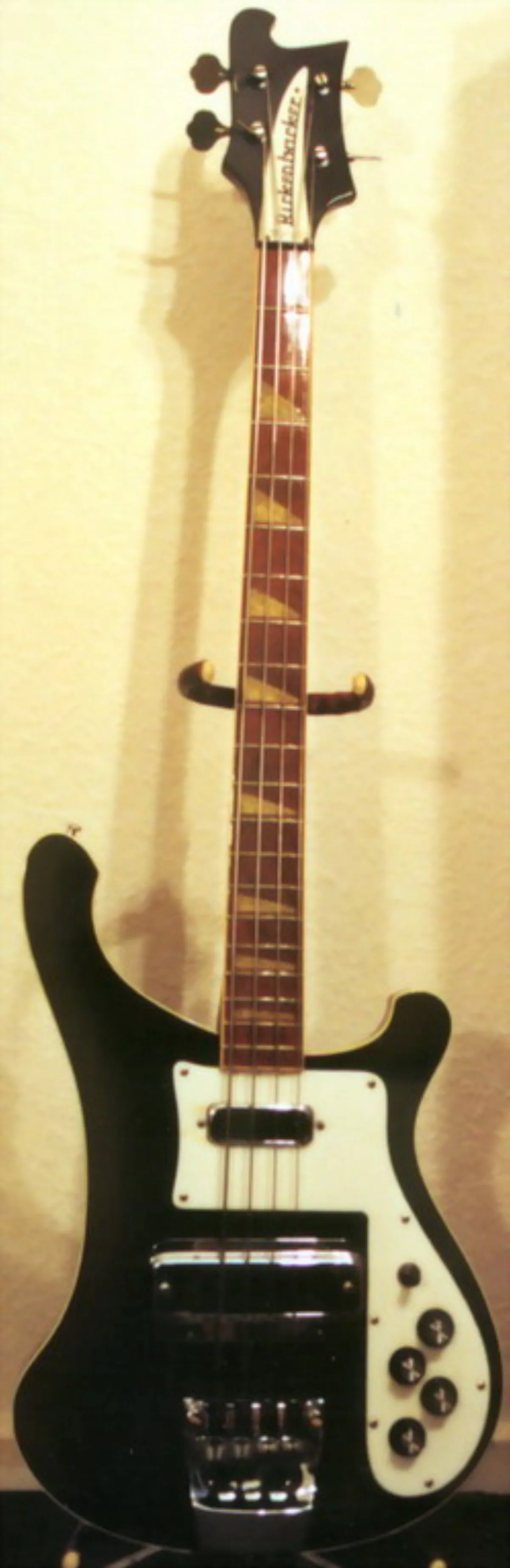
- Washburn M10 (Black/green), *Alembic Spoiler (burl, early career; black with green frets in 2003 "I Don't Wanna Be Me" video), Fernandes Tremor (Green), Rickenbacker 4003 (Natural), and 'Steele Bass' (bridge MM pickup, used until 2010)*. He favored 24-fret, 34" scales.
Amps and Cabs
Peavey Tour 700 head powered by Peavey TVX 4x12 and 1x15 cabs (8-Ohm). Amp settings: Lows at 2 o'clock, Highs at 9 o'clock, Mids at 11 o'clock, Mid-frequency tuned for punch. This combo amplified the pedals' saturation into arena-filling doom.
Recreating Peter Steele's Tone: Pro Tips
To nail Steele's sound:
1. Start with a humbucker-equipped bass tuned low (B standard or drop A).
2. Chain: TU-3 > DS-1 (Distort/Level 10, Tone 3) > CH-1 (all 10 except Rate 6) > DD-3 (as above).
3. Glue knobs or use a pedalboard lock for presets.
4. Amp: Peavey-style with scooped mids, high lows.
5. Add feedback via volume swells; experiment with MT-2 for extra bite on faster riffs like "Creepy Green Light."
YouTube demos (e.g., InvisibleFace Bass using Ibanez SR605) confirm these settings yield 90% accuracy. Variations exist - some split signals or add EQ - but the Boss quartet captures Steele's essence: simple, brutal, eternal.
Steele's pedalboard wasn't flashy; it was battle-tested, reflecting a musician who valued tone over tech. This setup powered Type O Negative's 17-year run, leaving a blueprint for doom bassists worldwide. (Word count: 1,128)