Last updated:
Peter Steele's Bass Rig:
Amps, Cabinets & Live Setup
Steele's bass journey began in the gritty New York underground with Carnivore, where he honed a brutal, high-gain tone suited to fast thrash tempos. In the mid-1980s, during Carnivore's active years, he relied on robust Peavey gear for live shows. First documented around 1986, his setup featured two to four Peavey PB 3620 cabinets, each loaded with
Early Career: Forging the Foundation (1980s - Early 1990s)
Powering them were Peavey Mark IV bass heads, paired occasionally with Max bass heads by Type O Negative's debut era. He also experimented with early Peavey 8x10 cabinets, pushing boundaries while refining his sound. An Acoustic 100-watt combo with a 15-inch speaker entered the mix post some personal fallout, gifted by a family friend - a rare nod to simpler, vintage warmth amid his growing affinity for stackable power.
Steele owned an Aria APE bass early on, a 1980s model that influenced his effects choices. Strings were likely 50-110 extra-medium gauge to handle low tunings and rapid Carnivore passages, as reported by those close to his tech. This era's rig emphasized durability over finesse, setting the stage for Type O's slower, heavier doom metal.
Peak Type O Negative Era: Iconic Stacks and Tube Power (Mid-1990s)
By the mid-1990s, coinciding with October Rust's release in 1996, Steele's rig matured into a touring juggernaut. Live photos and interviews reveal a rackmount powerhouse: two Peavey Bassist preamps feeding four MosValve 800 power amps (with one backup), all under a Furman power supply. This setup powered his signature Peavey 3620 cabinets, which remained core through U.S. domestic shows until around 2000. He supplemented with four 4x12 cabinets for added projection.
In a 1996 Livewire magazine interview, just before October Rust, Steele confirmed using the 3620s alongside 4x12s. The MosValves gave way by late 1996 to three Peavey CS-12 power amps, offering cleaner, more reliable headroom for European tours. Rack tuners handled pitch reference, freeing the floor for effects.
Cabinets varied by venue availability, but Steele favored Peavey Tour series toward career's end - mixes of 410 and 115 models, sometimes with 18-inch JBL-loaded 118s. At Bizarre Fest 1999, widely regarded as his best live tone, the stage featured two walls of Marshall 4x12 stacks (stage right and left), likely augmenting his Peavey core for that era's distorted heft. Earlier claims of Peavey 210/118 combos surfaced in late-90s interviews, but visuals confirm Tour 410/115 dominance.
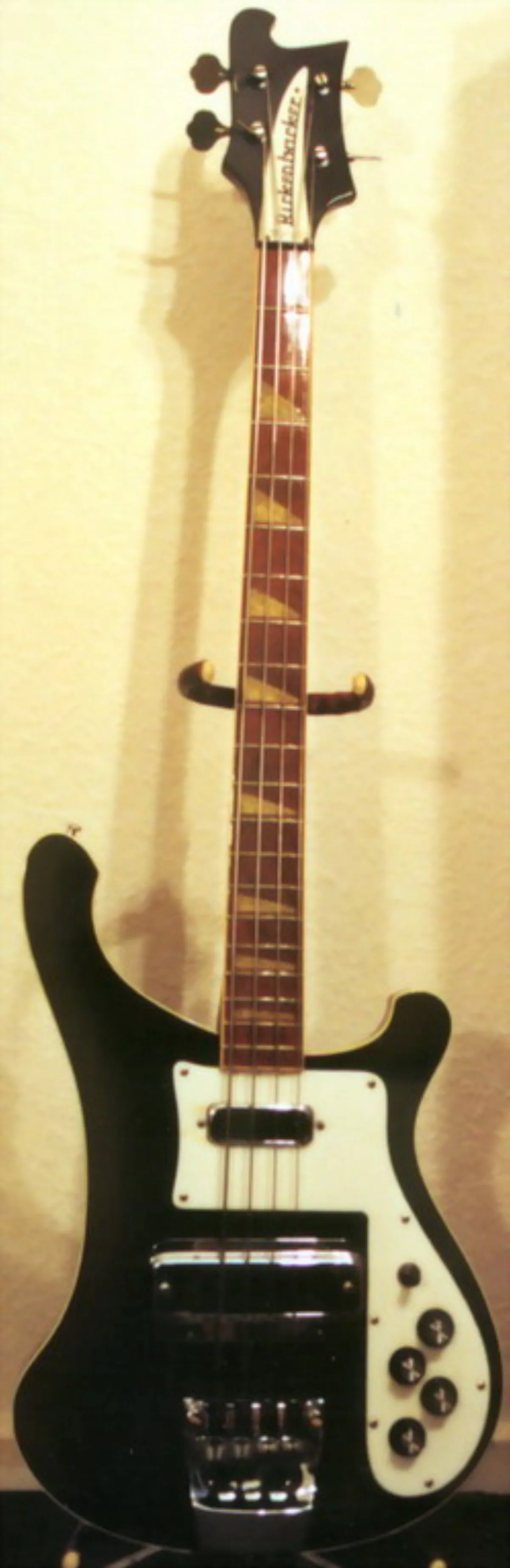
His basses amplified this setup perfectly. The ESH Stinger, with its 34-inch scale, Alembic AXY single-coil pickups (ceramic magnets, low-impedance, requiring onboard preamp), became iconic from June 1995 tours through at least June 1997 October Rust promotion - and possibly its recording. Alembics and Washburn models rounded out his arsenal, chosen for sustain and clarity in drop tunings.
Effects Pedalboard: Simplicity for Maximum Impact
Steele's pedalboard epitomized "less is more," prioritizing live reliability across venues from clubs to festivals. Core were Boss staples: the CH-1 Super Chorus for lush, swirling modulation that defined Type O's atmospheric intros, and a DD-3 Digital Delay placed before the CH-1. No TU-2 tuner cluttered the floor; rack units handled that.
A Boss DS-1 Distortion added grit, with another flanger (possibly Boss BF-1 or similar) for experimental sweeps. Photos show the DD-3 pre-CH-1 chain, sans volume pedal despite unverified 1996 Livewire mentions of one for feedback control. An ABY splitter allegedly separated clean (with tremolo) and effects feeds before recombining - third-hand info, but plausible given his dual-channel tendencies.
Steele tweaked EQ on his preamps to induce monitor feedback, a deliberate trick for solos. This board served Carnivore, Type O, and all venue sizes through most of his career, embodying his philosophy: pedals for texture, amps for thunder.
Evolution into the 2000s: Peavey MAX and Refined Power
The early 2000s brought modernization without abandoning Peavey loyalty. By Tuska Festival in July 2003, Steele integrated Peavey MAX Bass preamps into the rack, paired with GPS and/or CS power amps. Photos confirm both MAX units active via front inputs, their solid-state channels marked for knob settings - effects loops bypassed for direct signal.
Spare Peavey Tour bass cabinets (410/115 mixes) fronted his riser, ensuring redundancy on grueling tours. TubeWorks cabinets appeared sporadically, likely venue-supplied, loaded with noiseless Alembic-style pickups. This rig powered albums like World Coming Down (1999) and Dead Again (2007), maintaining the low-end wall that made Steele's playing feel orchestral.
A Peavey Tour 700 bass head also featured in some setups, as noted in gear forums. His tech racks streamlined: preamps, power amps, Furman distribution - no frills, just unrelenting volume.
Live Setup Breakdown: Stage Volume and Positioning
Steele's stage rig was a visual and sonic monolith, optimized for his 6'8" frame and theatrical presence. Cabinets stacked in towering arrays - often four 3620s or Tour cabs behind him, angled for projection. Racks sat stage right or left, with the pedalboard front-and-center for foot access during bass solos.
Power flowed from Furman conditioners to dual preamps (Bassist or MAX), splitting to multiple power amps driving cabinets. Monitor world EQ settings induced controlled feedback, blending with vocals. On larger stages like Bizarre Fest, Marshall 4x12 walls flanked his Peavey stacks, creating a panoramic low-end wash.
This configuration scaled effortlessly: intimate U.S. clubs got 3620 purity; festivals added 4x12s or Marshalls for arena fill. Visuals from 1995-2003 tours show consistent riser-fronted cabs, pedalboard low, racks elevated - practical for quick changes.
The Sound Signature: Why It Worked
Steele's tone married Peavey's aggressive mids and tight lows with chorus/delay shimmer, cutting through Josh Silver's detuned guitars and Sal Abruscato/Kenny Hickey's drums. ESH/Alembic basses provided articulate fundamentals; pedals added goth depth without mud. Live distortion occasionally lacked studio polish, but peaks like 1999's Bizarre Fest nailed crystalline heaviness.
He revolutionized bass in heavy music by treating it as lead instrument - feedback solos, melodic hooks - backed by rigs that prioritized volume over boutique nuance. Modern recreations use Nembrini Audio plugins or MosValve emulations to chase it, but nothing replicates the stack's physicality.
Legacy and Recreations
Peter Steele's bass rig endures as a blueprint for doom and gothic metal. Fans and techs dissect CrankyGypsy guides and Equipboard lists, replicating with Peavey MAX/C S-12 into Tour cabs, Boss CH-1/DD-3 chains, and ESH Stingers. His setup's evolution - from Carnivore's thrash brutality to Type O's epic swells - mirrors his career: unyielding, larger-than-life.
Though he passed at 48, Steele's gear choices remain verifiable through footage (e.g., Tuska 2003, Bizarre Fest 1999) and interviews, cementing his status as a tone architect. Aspiring players: stack deep, chorus wide, and let it feedback.
(Word count: 1,128)