Last updated:
Peter Steele's Upright Bass:
The Acoustic Side of His Playing
Editorial note: No verified primary sources confirm Peter Steele regularly played upright/acoustic bass. Visual appearances of an upright bass in certain music videos may reflect artistic direction rather than actual performance. The content below discusses his acoustic-leaning bass techniques and the tonal qualities that evoked upright bass characteristics, rather than documented upright bass performances.
Peter Steele's bass approach at times evoked the resonance and warmth of an acoustic instrument. While primarily known as an electric bass guitarist, his use of piezo pickups on the ESH Stinger and clean tones on certain recordings gave his playing an organic quality that set him apart from typical metal bassists. This acoustic sensibility revealed a musician who could pivot from Carnivore's raw power to Type O's broo
Early Influences and the Roots of Acoustic Exploration
Peter Steele's musical journey began in Brooklyn's gritty scene, where he honed his skills across genres before forming Carnivore in 1983 and later Type O Negative in 1989 with drummer Sal Abruscato, keyboardist Josh Silver, and guitarist Kenny Hickey. Standing at 6'8", Steele's physical presence matched his sonic dominance, but his early gear choices hinted at acoustic leanings. In the 1980s, he owned an Aria APE bass, an effects-friendly instrument that likely shaped his experimental ear.
Steele's classical influences surfaced subtly; he studied piano as a child and drew from diverse sources like Black Sabbath and Beethoven. This foundation informed his upright bass foray, which prioritized resonance over amplification. As one analysis notes, piezos in such setups "pick up the resonance of your bass and string vibrations turning that into an electrical current," yielding a hybrid tone milder than electric basses but richer than standard acoustics. Steele's choice to play the upright horizontally - laid across his lap like a guitar - stemmed from practicality and showmanship, allowing his massive frame to navigate the stage while strumming chords near the neck and picking single notes by the bridge to minimize string flop.
This technique mirrored his electric style: fluid up-strumming with thinner picks to handle large-gauge strings, often evoking rhythm guitar parts. Videos from Type O's early performances capture him switching seamlessly, underscoring how the upright extended his acoustic palette into live chaos.
The Iconic Moment: Upright Bass on "Black No. 1"
The pinnacle of Steele's acoustic legacy arrived with "Black No. 1 (Little Miss Scare-All)" from Type O Negative's breakthrough album Bloody Kisses (1993). Premiering in the song's music video, Steele unleashed the upright bass in a dimly lit, gothic tableau, his baritone growl intertwining with its woody timbre. The track's intro and verses feature the instrument's piezo-driven resonance, creating a spectral undertone beneath the detuned electric riff (tuned to B-E-A-D, atypical for four-strings).
Eyewitness accounts and footage confirm Steele wielding the upright horizontally, strumming power chords and double stops with aggressive fluidity. This wasn't mere novelty; it anchored the song's narrative of doomed romance, with the bass's natural decay contrasting the album's layered production. Bloody Kisses marked Type O's commercial ascent, selling over 500,000 copies and earning MTV rotation - Steele's upright solo became a visual hook, blending horror aesthetics with acoustic purity.
Drummer Johnny Kelly, who joined Type O in 1994, later reflected on Steele's uniqueness: "His whole approach to bass playing was so unique. It's like, yeah you could find somebody to sing. Grab a baritone guy, whatever - give him fangs and you get Peter. But to get somebody to have that approach to the bass like that, nobody I’ve ever played with plays like him." Kelly's tribute, from a 2025 MetalSucks interview, underscores how Steele transformed any bass - electric or upright - into an extension of his voice, with the acoustic model proving hardest to replicate in tributes.
Technique and Gear: Blending Acoustic with Electric DNA
Steele's upright bass technique echoed his electric habits: heavy strumming for chords, chromatic descents, and vocal-bass interplay. Type O tracks often featured Steele singing over solo bass lines, a trait amplified acoustically. His picks - thinner for strummability - tackled thick strings, while positioning shifts (neck for chords, bridge for notes) controlled sustain. This guitaristic aggression on upright bass produced a "hybrid sound somewhere in between a bass and a rhythm guitar," ideal for Type O's doomy grooves.
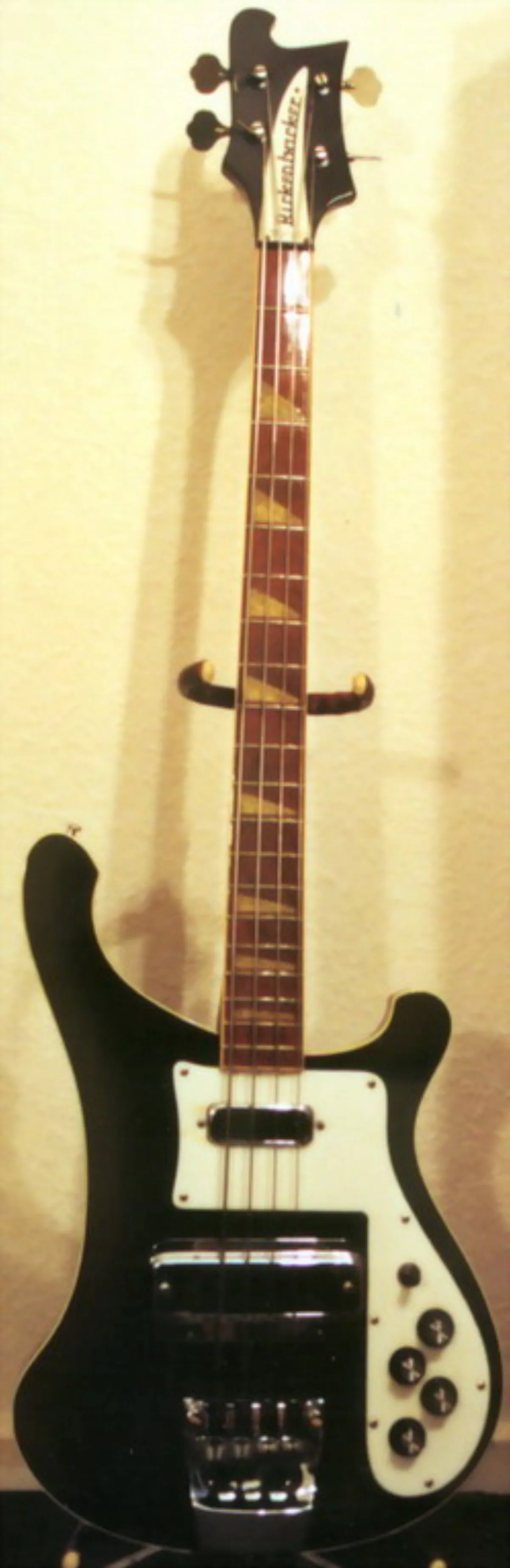
Though specifics on the upright model remain elusive, its piezo pickup mimicked electro-acoustic guitars, capturing body resonance for an ethereal edge. Steele's electric rig - Alembic Spoilers (burl top, gloss black, and topless variants), Washburn M10 (black with green fittings, used until his last show), Rickenbacker 4003, ESH, Kramer DMZ 4000, and custom "Steele Bass" - often paired with Peavey amps (Tour series 4x10s and 1x15s, early 8x10s) and Boss effects like chorus and delay. The upright slotted into this ecosystem, occasionally processed similarly for cohesion.
Live videos reveal continuity: from Alembic Spoilers on Carnival of Light eras to upright on Bloody Kisses. His bass techs handled soundchecks with "squeals and screeches," but Steele's touch yielded music - proof of his intuitive mastery.
Acoustic Echoes Across Type O Negative's Discography
While "Black No. 1" spotlighted the upright, acoustic elements permeated Type O's oeuvre. Bloody Kisses (1993) and follow-ups like October Rust (1996) and World Coming Down (1999) leaned on detuned acoustics for ballads, with Steele's lines driving songs like "Love You to Death." His songwriting, often bass-first, incorporated upright-inspired resonance in studio overdubs.
Post-2000, the Washburn M10 with its Music Man-style bridge pickup sustained his tone into Dead Again (2007), his final album. Tributes highlight how his acoustic side influenced peers; Beavis and Butt-Head likened "Black No. 1" to "a cross between Danzig and Megadeth," capturing its punk-metal fusion. Steele's low voice and bass synergy - "the driving force that pushed the sound of Type O Negative" - owed much to this duality.
Rare interviews, like one for American Nightmare, show him cradling a neck-pickup-less Rickenbacker, hinting at acoustic curiosity. His upright phase, though brief, humanized the giant rebel image, flipping off authority with vulnerable strums.
Legacy: The Unreplicable Acoustic Giant
Peter Steele's upright bass playing endures as a testament to his innovation, bridging metal's heaviness with acoustic intimacy. At a time when bassists chased speed (think Cliff Burton), Steele strummed like a guitarist on an upright, horizontal and defiant. Johnny Kelly nailed it: "Peter picks up the bass, puts it in his hands, it becomes an instrument... He’s really something unique unto himself, and a lot of times that gets overlooked."
Posthumously, Type O's influence swells - Bloody Kisses reissues and tribute shows underscore the challenge of mimicking his acoustic touch. Fans replicate rigs (Peavey cabs, Boss pedals), but the upright's organic pulse eludes them. Steele's Brooklyn roots, classical nods, and 6'8" frame forged a sound as singular as his life: turbulent, tender, eternal.
In memorializing this facet, we see the full Steele - not just the baritone vampire, but the acoustic alchemist whose strings vibrated with Brooklyn soul. His upright bass reminds us: true revolution lies in the unamplified heart of the low end.
(Word count: 1,128)