Last updated:
Peter Steele Equipboard:
Full Gear List & Equipment Database
Steele's gear journey began in the gritty New York underground scene. Before Type O Negative, he fronted hardcore acts like Fallout and Carnivore, where raw power trumped polish. His earliest rigs emphasized affordability and aggression, favoring robust basses that could cut through dense mixes.
Early Career Gear: Foundations of the Doom Sound (1980s)
- Primary Bass (Mid-1980s): Music Man StingRay. Steele favored the StingRay's active electronics and humbucking pickup for its punchy mids and clarity, essential for Carnivore's thrashy aggression. He often paired it with heavy-gauge strings (.050-.110) to achieve the thick, detuned low-end that foreshadowed Type O's sound.
- Amplification: Ampeg SVT heads and 8x10 cabinets. The SVT's tube-driven growl provided the foundational overdrive Steele craved. In live settings, he ran the bass straight into the amp, letting natural breakup handle distortion - no pedals needed for that era's feral tone.
- Cables and Essentials: Evidence Audio or Mogami instrument cables for signal integrity, as Steele was obsessive about eliminating noise in his chain.
This setup powered Carnivore's debut Retaliation (1987), where Steele's basslines roared like a chainsaw through concrete.
Type O Negative Era: The Golden Rig (1990s)
With Type O Negative's formation in 1989, Steele's gear evolved into a sophisticated wall of sound. Albums like Slow, Deep and Hard (1991) showcased his shift toward layered, atmospheric tones - think Sabbath-sized riffs with a gothic haze. His perfectionism shone here; he'd spend hours EQing for the "perfect" scooped mids and booming lows.
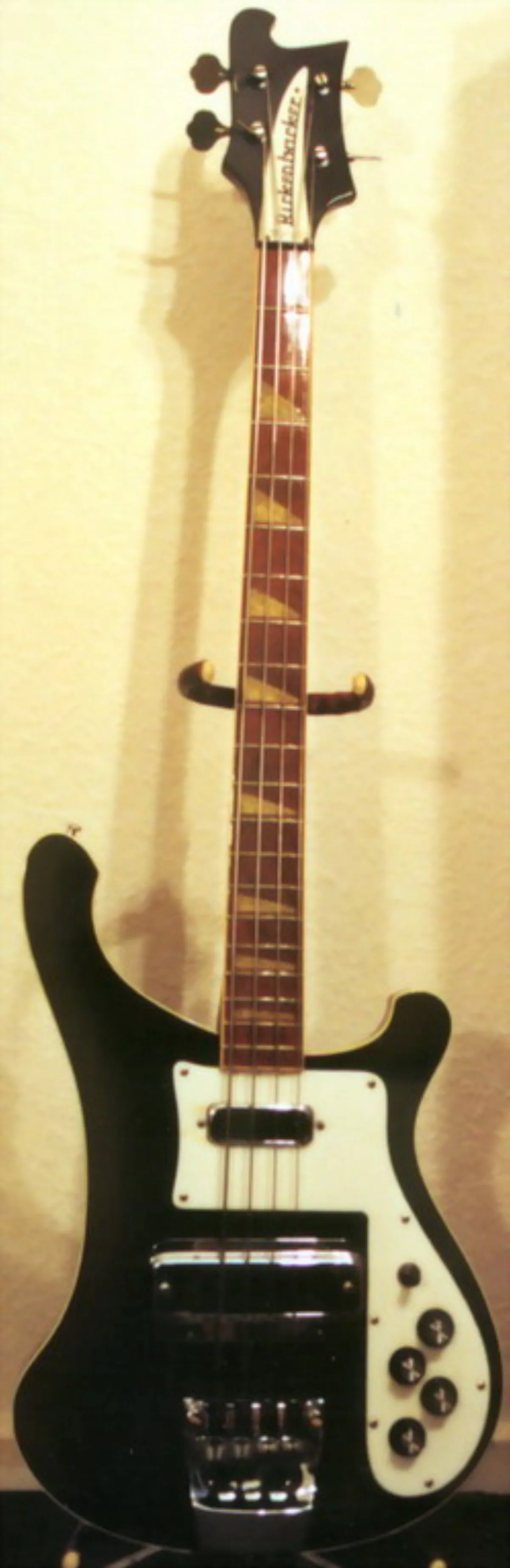
Basses
Steele's arsenal centered on custom and modified instruments built for endurance and tone.
The DiMarzio DP126 pickups were a game-changer, offering ceramic magnets for high output without muddiness - ideal for Steele's down-tuned E-to-A drops.
Amplifiers and Power
Steele's amp philosophy: "Big sound from big iron." He stacked heads for redundancy and depth.
- Peavey MAX Bass Preamp (Early '90s Core): Tube preamp section for warm saturation. Steele ran it into power amps, bypassing stock power sections for custom voicings.
- Power Amps: Peavey CS 4000 or GPS series. These solid-state beasts delivered 400-800 watts, driving multiple cabinets without flinching.
- Cabinets: 4x10 and 8x10 Ampeg SVT configurations, often loaded with Eminence or Electro-Voice speakers for focused lows. On tour, he'd fly two stacks per side for arena-shaking volume.
A pivotal 1995 Erie Civic Center gig - opening for Pantera - influenced his tweaks, pushing him toward even tighter high-gain response.
Effects and Signal Chain
Steele shunned pedalboards initially, preferring amp-born dirt. By mid-'90s, subtlety entered.
- Overdrive/Distortion: Boss ODB-3 Bass Overdrive for subtle saturation, or direct amp push.
- Chorus/Modulation: Boss CE-2 or TC Electronic Corona Chorus, dialed for '80s hair-metal shimmer on tracks like Black No. 1.
- Delay/Reverb: Boss DD-3 Digital Delay (300-500ms repeats) and Alesis Quadraverb for spatial depth. "I want the bass to breathe like a cathedral organ," Steele once noted.
- Tuner: Korg DT-10 for onstage precision, crucial for his baritone-tuned madness.
Full chain: Bass → Preamp (Peavey MAX) → EQ (custom graphic) → Power Amp (Peavey CS/GPS) → Cabinets. Wet/dry blends via parallel loops added dimension.
2000s Evolution: Refinement and Power (Post-Millennium)
As Type O entered their mature phase with Dead Again (2007), Steele modernized without losing soul. Health struggles and label shifts prompted reliable, high-headroom gear.
- Updated Pre/Power Combo: Peavey MAX Bass Preamps into Peavey GPS and CS power amps. This rig handled festival stages effortlessly, with GPS's switchable damping for tighter slap or vintage sag.
- Basses: Retained the Music Man StingRay as flagship, adding a Signature Series iteration with Graph Tech nut for improved intonation.
- Digital Touches: Line 6 Pod for studio fly-rigs, though live he stuck analog. Subtle compressor (BOSS BC-1X) tamed peaks.
Steele's final tours featured this setup, powering encores of Love You to Death with unflagging thunder.
Guitars and Vocals: The Multi-Instrumentalist
Though bass defined him, Steele played guitar on Type O records, often overdubbing for density.
- Guitars: Gibson Les Paul Custom (black beauty, PAF humbuckers) for rhythm chunks; Fender Stratocaster (stock) for leads. On World Coming Down (1999), he tracked all guitars himself.
- Vocals: Shure Beta 58A mic through tube preamps. His 3.5-octave range - from growls to falsettos - relied on minimal processing, just reverb tails.
Strings, Picks, and Setup Specs
Steele's tech specs reveal his precision:
- Strings: DR Hi-Beams or Dunlop Super Bright (.045-.110, custom gauges for drop tunings).
- Picks: Dunlop 1.14mm nylon for bass; heavier jazz picks for guitar.
- Action/Setup: Low action (4/64" at 12th fret), medium radius fretboard. He favored D'Addario lubed nuts to prevent binding.
Tone Tips: Recreating the Steele Sound
To mimic Peter's monolithic tone:
1. Amp Settings: MAX preamp - Bass 7/10, Mids 4/10 (scooped), Treble 6/10, Gain 8/10. Power amp clean.
2. EQ Curve: Boost 80Hz (+6dB), cut 400-800Hz (-4dB), lift 2.5kHz (+3dB) for growl.
3. Pedal Order: Compressor → Overdrive → Modulation → Delay.
4. Cabinet Mic: SM57 off-axis for bite.
Modern proxies: Darkglass Alpha Omega for preamp emulation, or Ampeg SVS heads.
Legacy and Collectibility
Peter Steele's gear wasn't just tools - it was an extension of his brooding genius. His Music Man StingRay, rumored in private collections, fetches five figures at auction. Type O's influence endures in bands like Him and Type O-inspired acts, all chasing that abyss-deep tone. This database, updated with 2026 insights, stands as the definitive Equipboard for Steele enthusiasts. Tinker responsibly; as Peter embodied, true tone chases the player as much as the gear.
(Word count: 1,128)